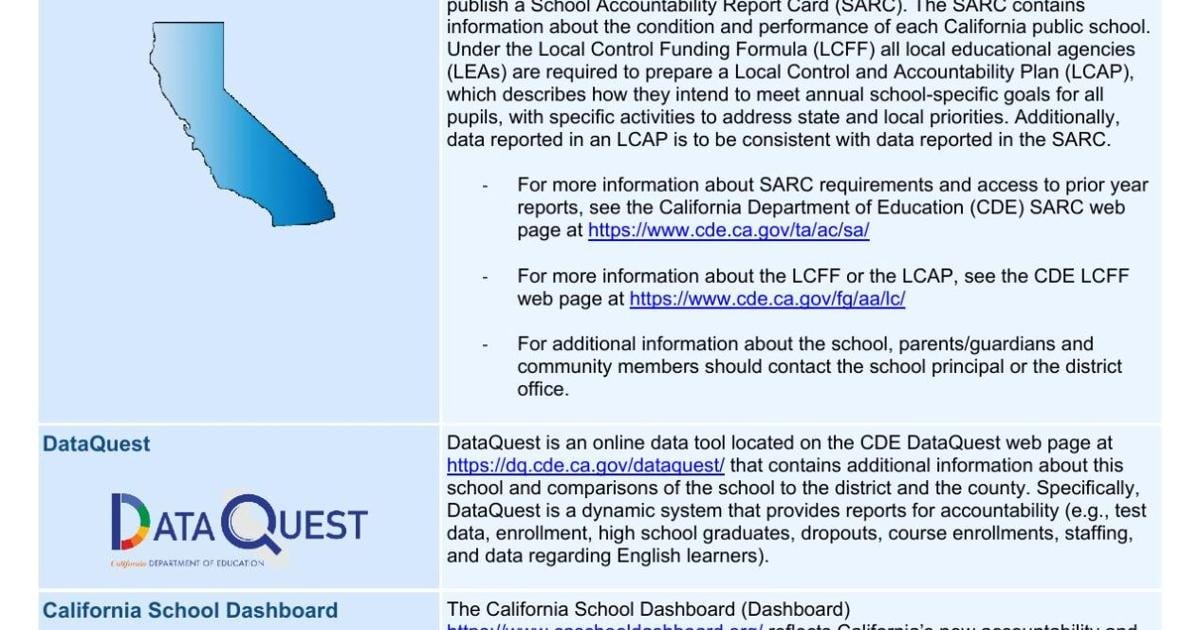
Annual accountability reports reveal that the Needles Unified School District is successfully maintaining its facilities, staffing, and classroom resources despite the unique challenges faced by a small rural district. The district’s governing board reviewed these reports during a meeting held in February 2024, highlighting the commitment to provide quality education in a constrained environment.
Snapshot of Conditions in Needles Schools
Under California law, the School Accountability Report Cards are mandated to be released each year, offering a detailed overview of the operational status of each campus. These reports assess various critical aspects, including facilities, staffing levels, student enrollment, and academic performance. They serve as a vital tool for parents, educators, and community members to understand the current state of education within the district.
The findings from the latest reports indicate that, despite financial constraints and demographic challenges, the district has managed to maintain a stable environment for its students. The commitment to uphold educational standards is evident in the allocation of resources towards essential facilities and staffing, ensuring that students receive the necessary support for their academic journey.
Community Engagement and Future Goals
Community involvement plays a significant role in the district’s success. School officials emphasize the importance of collaboration with local stakeholders to address ongoing challenges. By fostering strong relationships with parents and community members, the district aims to enhance its educational offerings and ensure the best possible outcomes for students.
Looking ahead, the Needles Unified School District plans to continue prioritizing investment in educational infrastructure and staff development. This proactive approach is intended to not only maintain current standards but also to explore new opportunities for growth and improvement.
The commitment of the Needles Unified School District to uphold educational quality in the face of adversity reflects a broader trend in rural education. As schools navigate the complexities of funding and resource allocation, the district’s efforts serve as a model for similar communities striving to provide a robust educational experience for their students.