Children who start school without having been read to at home face significant educational disadvantages, according to Frank Cottrell-Boyce, the UK’s children’s laureate. Speaking at the Association of School and College Leaders (ASCL) annual conference, he emphasized that nearly half of all children begin their schooling as “second-class citizens” due to limited early exposure to books.
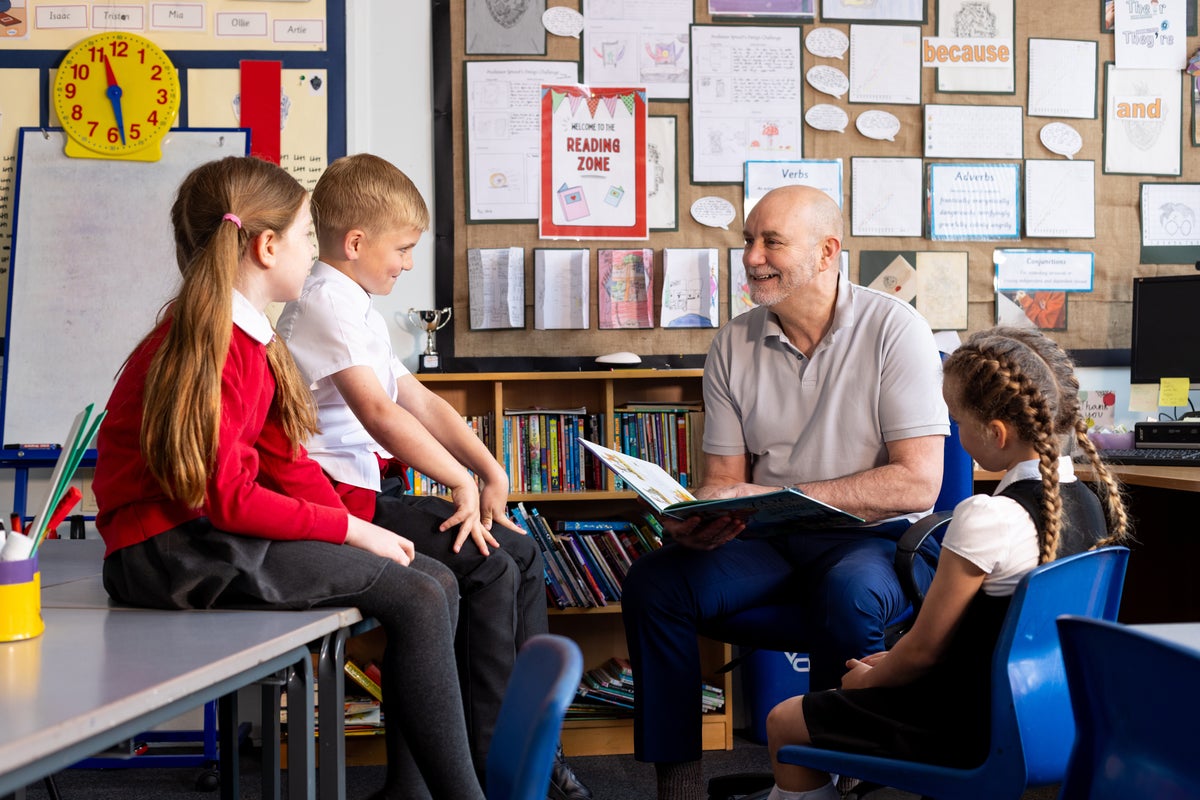
Mr. Cottrell-Boyce revealed that “close to 50% of our children are arriving at school without having been read to.” This lack of early reading experiences places them at a “massive disadvantage.” He highlighted the “massive, invisible privilege” that children enjoy when their first encounter with a book is a shared moment with a family member. In contrast, those whose initial experience involves technology, such as tablets or e-readers, often find it challenging to engage with traditional books.
Concerns Over Reading Skills and Government Response
Recent data reflects a concerning trend in children’s literacy. A survey conducted by Kindred Squared revealed that more than one in four teachers reported students starting school unable to use physical books correctly, often treating them like digital devices. Additionally, research from the National Literacy Trust found that only one in three young people aged between eight and 18 read during their free time.
In light of these findings, the UK Government has launched its National Year of Reading campaign, which encourages parents to spend just ten minutes a day reading with their children. Bridget Phillipson, the Education Secretary, is advocating for this initiative as part of wider efforts to instill a love for reading among young learners. Furthermore, the Education Select Committee has begun an inquiry into the generational decline in reading for pleasure, and new guidelines regarding screen time for children under five are on the horizon.
Mr. Cottrell-Boyce also pointed to societal issues impacting children’s readiness for school. He discussed how educators are increasingly dedicating time to support students unprepared for the classroom, often due to family poverty. He attributed the exhaustion felt by teachers to “systemic social injustice,” noting that austerity measures have severely weakened crucial support systems such as family hubs, Sure Start centres, libraries, and youth clubs.
Addressing Wider Challenges Beyond Education
Teachers’ unions have consistently raised concerns that schools are taking on roles beyond education, providing support for issues such as housing instability, food insecurity, and access to essential services. In response, the Government is funding new Best Start family hubs and free breakfast clubs in primary schools to help alleviate these challenges.
At the same ASCL conference, Ms. Phillipson committed to creating “a village around the child,” positioning schools as the “beating heart of that support.” She also announced the decision to abolish the two-child benefit cap, aiming to enhance family support and improve educational outcomes for children facing adversity.
As the landscape of early childhood education evolves, the urgency to address these disparities grows. By fostering a culture of reading and providing necessary support in the community, stakeholders hope to empower all children to start their educational journey on equal footing.