In January 2024, the New York art scene vibrantly emerged from its winter lull with notable exhibitions showcasing thought-provoking installations. One such exhibition, “my Life Underground” by artist Jeffrey Joyal, took place at the Gandt Gallery, located within the Aristotle Psychological Facility in Astoria. This exhibition, featuring reproductions of Tom Otterness’s public art series, examines themes of isolation and the commercialization of public resources against the backdrop of the Trump era.
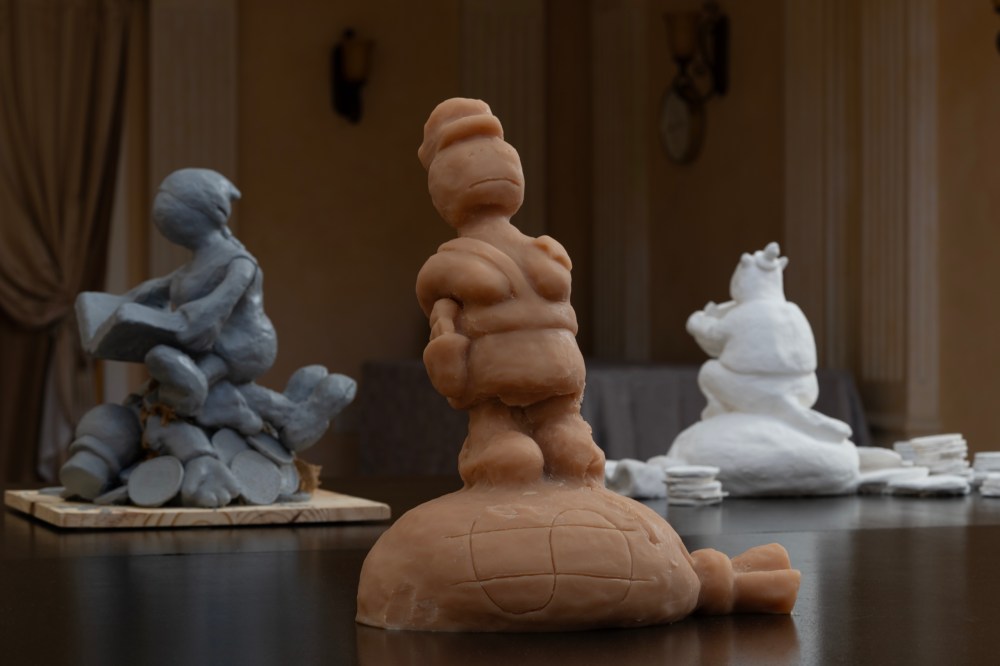
Joyal’s exhibition marks a departure from the gallery’s previous basement location, presenting the artwork in an unconventional setting adorned with a chandelier and vintage portraits. The centerpiece of the show consists of eleven reproductions of Otterness’s “Life Underground,” originally crafted between 1998 and 2001 for the subway station at Fourteenth Street and Eighth Avenue. Joyal created these replicas using unauthorized casts and scans of the original bronze sculptures, which depict various figures such as immigrants and commuters.
While the exhibition’s narrative highlights the struggles of New York’s underrepresented individuals, it also critiques the privatization of public art. Unlike Marcel Duchamp’s appropriated works, Joyal’s reproductions lack the original context that tied them to the communal experience of subway riders. Instead of encouraging interaction, the sculptures are arranged to face away from each other, symbolizing isolation in an era increasingly marked by individualism and extraction.
The playful yet critical nature of Joyal’s work is evident in his reinterpretation of Otterness’s signature money bag and dollar-sign figure, rendered in a shiny, cheap material. This attention to detail underscores a broader commentary on how public art is often transformed into commodities.
Exploring the Interplay of Abandonment and Memory
Following Joyal’s exhibition, visitors could find Mitchell Kehe’s installation “Bonded by the Spirit of Doubt” at 15 Orient in TriBeCa. This collection features a variety of assemblage sculptures and canvases, incorporating discarded materials and exploring themes of uncertainty. In one notable piece, “Untitled 1 (Bonded by the Spirit of Doubt),” Kehe juxtaposes a painted figure against a void, with the shapes appearing and dissolving in an unresolved tension.
The installation includes a sculpture titled “First Layer of Revelation,” formed from makeshift materials and reflecting a precarious balance. Kehe’s work invites viewers to consider the beauty of fragility amidst chaos, contrasting sharply with the more permanent nature of public sculptures.
In a nearby gallery, Clémence de La Tour du Pin showcased a series of eerie paintings that evoke archaeological relics. The largest piece, “Untitled,” measures two and a half inches in height and nearly twenty feet in width, resembling a colossal tusk. These works are imbued with a sense of permanence, suggesting that human artifacts will endure long after our existence fades.
John Duff’s Sculptural Journey through Time
Over in Chinatown, John Duff displayed a retrospective of his six-decade career at Reena Spaulings. The exhibition includes a range of sculptures crafted from resin, fiberglass, and concrete, with some pieces dating back to 1968. Duff’s early works present an aged aesthetic, combining cracked and warped materials to create haunting forms reminiscent of fossils.
Among his more recent pieces, “Untitled (2025)” features a complex structure held together by intersecting panels, showcasing the tension between flexibility and rigidity. Duff’s sculptures provoke questions about durability and the nature of decay, particularly as they teeter on the brink of collapse.
Throughout these exhibitions, the artists engage with the themes of pressure, permanence, and the human experience. As the art world reflects on isolation and transformation, January’s showcases remind attendees of the power of art to provoke thought and inspire dialogue. In a season often marked by stillness, these exhibitions offer a vibrant exploration of resilience and creativity.
As the winter chill envelops New York, the artistic community remains active and engaged, inviting both reflection and connection amid the ongoing complexities of modern life.