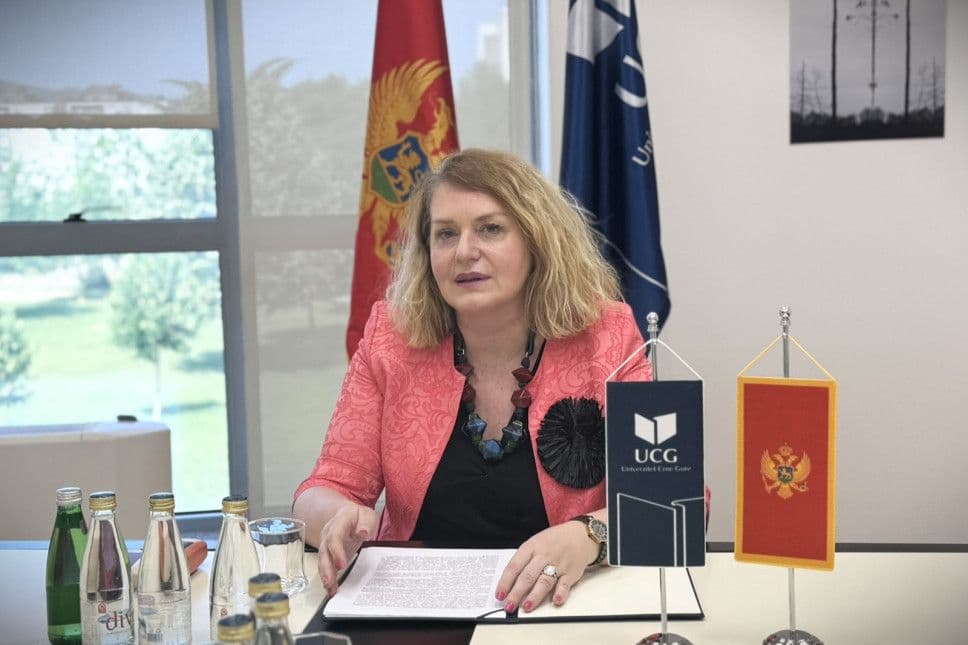
Prof. Dr. Branka Bošnjak, the advisor for strategic policies and sustainable development at the University of Montenegro, has expressed concern over the academic community’s silence regarding significant social issues. In an interview with Pobjeda, she highlighted the crucial role of knowledge as a society’s most potent tool and called for academics to demonstrate responsible engagement to students.
Bošnjak, who previously served as a member of parliament and the first vice-president of the Montenegrin Assembly, has always been vocal about the education system’s shortcomings. She has advocated for an increase in university professors’ salaries, leading to a more than 60 percent pay rise for many educators. Her commitment to transforming higher education remains evident in her current role.
In the interview, Bošnjak shared her perspective on the state of higher education in Montenegro, including ongoing challenges and potential improvements. She criticized the current method of electing university rectors, advocating for a system that would depoliticize the process and allow the academic community to elect leaders through direct voting.
Raising Awareness and Engagement
Bošnjak emphasized that her approach is rooted in constructive criticism aimed at the greater good. She noted that silence among academics can be as detrimental as ignorance, stating, “Passive behavior and the silence of the academic community are equally damaging as the ignorance that often comes from the highest levels of leadership.”
She called for a more proactive role from university faculty in addressing pressing social and political issues. Bošnjak remarked on the need for professors to utilize their expertise to inform public discourse, particularly in the face of rising challenges such as xenophobia and social injustice.
Reflecting on her experiences, she mentioned the importance of open discussions, including public forums on sensitive topics like environmental issues and social policies. Bošnjak believes that the university must serve as a platform for critical engagement rather than a passive observer.
Addressing Political Influences and Challenges
When discussing political appointments within the university, Bošnjak acknowledged the presence of the “old guard” in administrative positions but noted that new, younger professionals are increasingly joining the ranks. She pointed out that while the university’s workforce has expanded, the workload has also increased due to various international collaboration projects.
Bošnjak shared her commitment to preventing political dominance over academic affairs. She expressed concern over the current election system for rectors, which she believes lacks democratic integrity. The existing model, in her view, allows for too much political influence, making it possible for non-academic representatives to outnumber professors on the governing board.
The academic environment at the University of Montenegro has shown signs of improvement, according to Bošnjak. She highlighted valuable practices and initiatives that have taken place, although she also noted that many of these efforts remain underreported in the media. For example, visits from Nobel laureates and prominent professors often go unnoticed, overshadowed by negative news.
Bošnjak is actively working to establish a scientific database at the university to engage university experts in developing government strategies and policies. This initiative has been met with some approval from university leadership, although responses from government officials remain slow.
She expressed frustration at the government’s lack of responsiveness, stating, “Such a relationship indicates a lack of seriousness and inadequate recognition of the expertise available at the University of Montenegro.” Bošnjak believes that the government needs to establish a structured approach to collaboration with academia rather than relying on informal connections.
Bošnjak’s vision for the future of the University of Montenegro includes an increased focus on transparency and accountability. She urges the academic community to take a stand on critical issues, fostering an environment where knowledge and reason can lead the way for societal progress.
The dialogue around these topics continues to evolve, and Bošnjak’s commitment to change highlights the need for ongoing engagement between academia and society. She remains hopeful that the university can become a more influential force in addressing the challenges faced by the nation.