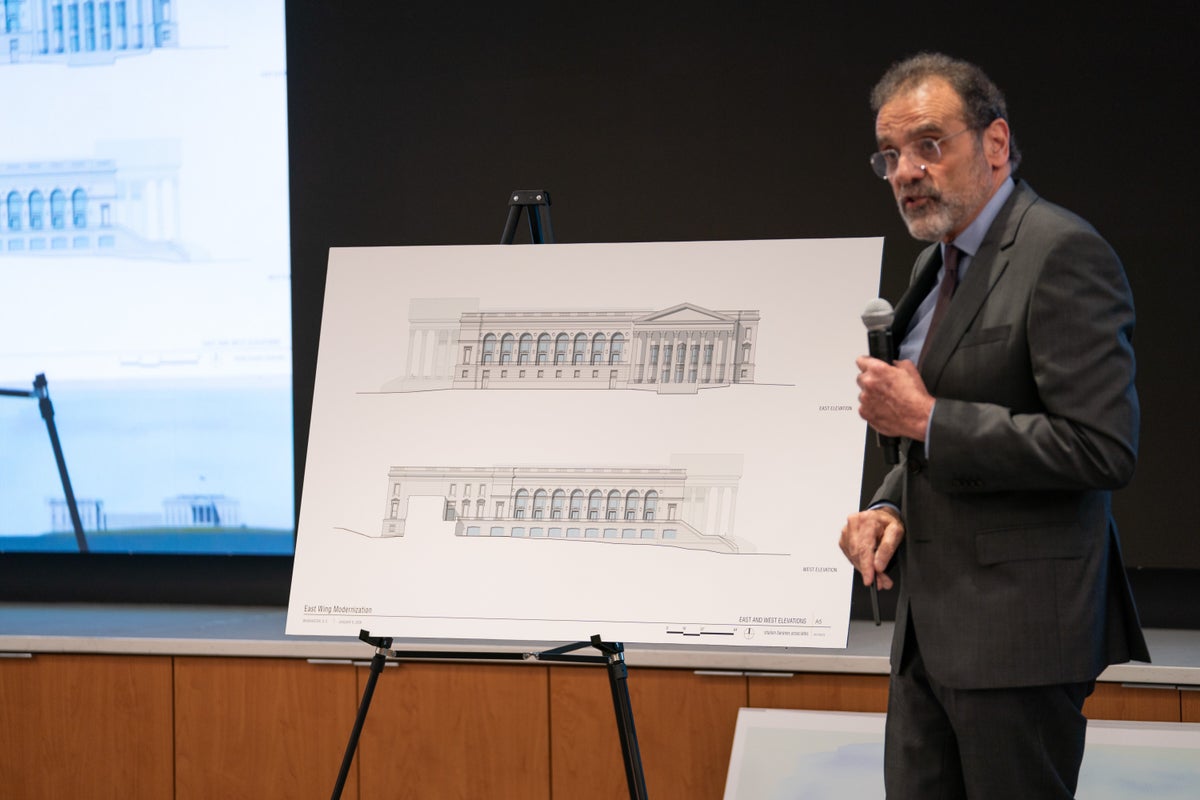
Donald Trump’s ambitious ballroom project, estimated at $400 million, aims to create a space as tall as the original White House. Architect Shalom Baranes revealed the design during a presentation to the National Capital Planning Commission on Thursday. The proposed ballroom, capable of accommodating 1,000 guests, will feature ceilings approximately 40 feet high, matching the height of the historic executive mansion.
Baranes explained that the height of the ballroom would align precisely with that of the White House, a detail that raised concerns among commission members. Phil Mendelson, the D.C. Council Chairman, questioned whether the addition’s height could be reduced, expressing his worry that the new structure might overshadow the historic building. Baranes responded that a reduction in height was indeed a possibility.
This public meeting marked the first comprehensive overview of the ballroom’s plans, which encompass a total area of about 22,000 square feet. The ballroom is part of a larger East Wing renovation that includes offices for the First Lady, a rebuilt White House movie theater, a commercial kitchen, improved entrances, and a two-story colonnade leading to the White House itself. Baranes noted that these enhancements would alleviate “ongoing operational stress” on the White House grounds.
Controversies and Legal Challenges
The ballroom project has generated significant controversy and faced a barrage of legal challenges. The National Trust for Historic Preservation initiated a lawsuit last year, claiming that the Trump administration commenced construction before obtaining the necessary approvals from the planning commission and Congress. The trust argues that construction on federal park land requires formal consent, alleging the administration essentially “broke the rules first and asked for permission later.”
In a December ruling, a judge declined to halt the construction process. The Trump administration has since engaged with staff from both the planning commission and the Commission of Fine Arts, asserting that these meetings fulfill the planning requirements. The Commission of Fine Arts is scheduled to convene on January 15, ahead of a critical vote on the ballroom project set for March 5.
Democratic lawmakers have raised concerns that the ballroom’s funding might facilitate potential influence-peddling within the administration. Major contributors to the project include large corporations with business interests before the federal government, such as Amazon, Google, and Microsoft.
Amidst these financial concerns, questions persist regarding whether the administration adequately addressed the removal of the carcinogenic compound asbestos during the rapid demolition of the East Wing last October.
Next Steps and Timeline
Administration officials are pressing for expedited approval of the ballroom project, aiming to commence construction by April. The outcome of the upcoming votes will play a crucial role in determining the future of this high-profile addition to the White House complex. As plans evolve, the implications of this project will likely resonate beyond architecture, touching on broader themes of governance, transparency, and historical preservation.