The recataloguing and repackaging of tens of thousands of historical artefacts is currently under way at a state-of-the-art archaeological storehouse in Co Antrim, Northern Ireland. This initiative follows a significant upgrade to the facility, which has doubled its capacity to better preserve and manage the vast collection of artefacts recovered from archaeological digs across the region.
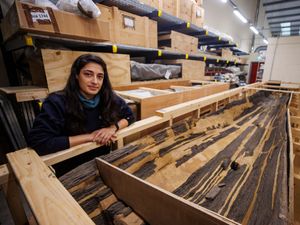
Historically, only a small fraction of recovered items have been displayed in museums, while the majority were stored in various locations until the establishment of this centralised store by the Historic Environment Division (HED). The storehouses rare items include flint spearheads and a remarkable seven-metre, 4,000-year-old log boat discovered near the River Bann. Many of these artefacts date back decades, when cataloguing practices did not meet modern standards.
New Guidelines Introduced for Artefact Preservation
Archaeologists at the store are now focused on addressing previous shortcomings in preservation methods. Earlier this year, a new set of guidelines was introduced to enhance standards for artefact care in Northern Ireland. According to Sapphire Mussen, a curatorial archaeologist involved in the project, the region’s standards had previously lagged behind those in the rest of the UK and the Republic of Ireland.
“The standards of practice naturally do change with time, and unfortunately we’ve fallen behind a little bit here,” Mussen stated. “We’re no longer in line with other jurisdictions, but we have made massive strides to change that.”
Mussen highlighted that starting in 2025, all new excavation archives generated in the field will need to adhere to specific standards for long-term storage and preservation. As for the legacy archives housed in the Co Antrim store, which predate 2025, efforts are underway to improve their care, including enhanced packaging and labelling.
Facilitating Research and Global Collaboration
The store is accessible to archaeological researchers who can apply to the HED to examine artefacts. Researchers are permitted to conduct various tests, such as carbon dating, to further their studies. Mussen noted that the facility is prioritising artefacts that are of interest to these scholars, aligning its work programme with their research needs.
“Researchers from around the world have sought access to the storehouse,” Mussen said. “The success in what we do is measured by seeing those researchers come in and seeing the collections be used in a meaningful way.”
Interest has come from various regions, including the United States, Scotland, and the south of Ireland. Recent requests included an examination of glass beads from an early medieval site, demonstrating the significance of the artefacts in understanding the history and lifestyles of past populations on the island.
Mussen expressed the importance of making these artefacts accessible for research. “If they sat on a shelf, one could question the point in holding onto them,” she remarked. “But they are invaluable as research potential.”
The ongoing efforts to recatalogue and preserve these historical artefacts underscore the commitment to enhancing archaeological standards in Northern Ireland and ensuring that its rich heritage continues to inform future generations.