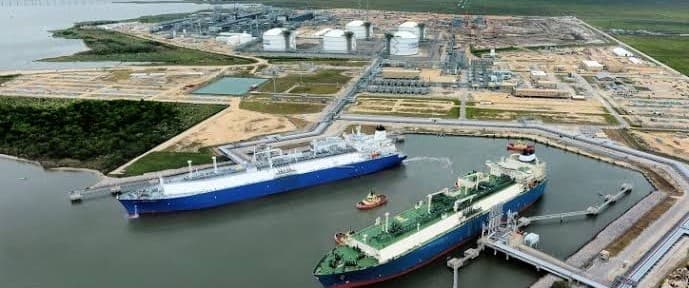
The liquefied natural gas (LNG) market, after experiencing a record year in 2025, now grapples with significant geopolitical risks as tensions rise between major players. The European Union has recently put its trade agreement with the United States on hold, creating uncertainty in a market that was previously buoyed by optimistic forecasts for 2026.
Geopolitical Tensions Impact Trade Agreements
This shift comes in the wake of Donald Trump‘s announcement of 10% tariffs on eight countries, which he claims are obstructing his goal of purchasing Greenland. These nations, including Denmark, Norway, Sweden, and Germany, recently sent military personnel to Greenland, underscoring their commitment to the island’s security. If negotiations falter, tariffs could escalate to 25% later this year.
In response to these developments, the European Commission, led by President Ursula von der Leyen, has suspended a substantial trade deal initially aimed at securing $750 billion in U.S. energy commodities over three years. Analysts had already expressed skepticism about the feasibility of this agreement, given the EU’s inability to absorb such a large volume of LNG. Nevertheless, European LNG imports surged by 60% in 2025, contributing to a historic 25% increase in global LNG sales.
Despite Europe’s appetite for American LNG, the broader economic landscape presents challenges. Analysts have noted that sluggish industrial activity and economic growth in Europe could dampen future LNG demand, raising concerns about whether expectations will be met.
Asia Remains a Key Player in the LNG Market
While Europe navigates these challenges, the Asian market continues to display resilience. In 2025, Asian buyers accounted for 64% of global LNG exports, although this figure represented a 5% decline from the previous year, particularly influenced by a 15% decrease in Chinese imports. This decline is attributed to increased domestic natural gas production and higher pipeline imports from Russia.
Looking ahead, Kpler has projected that LNG capacity additions could reach 37 million tons annually, following 51 million tons added in the previous year. This increase in supply may pressure prices downward, potentially spurring renewed demand in Asia, especially in China, where import levels are expected to rise to 73 million tons in 2026, up from 68.43 million tons in 2025.
Meanwhile, the geopolitical situation in Europe could complicate the region’s LNG strategies. A deterioration in U.S.-European relations could lead to lower LNG prices, which would negatively impact producers but might enable faster recovery of demand from Asian markets. Additionally, Japan’s decision to restart nuclear reactors may further influence the global LNG landscape, as energy security takes precedence over concerns stemming from past nuclear disasters.
China’s increasing focus on boosting domestic natural gas production—projected to reach 278.5 billion cubic meters in 2026—may also reshape the market dynamics. In contrast, India has faced its own challenges, with LNG imports declining last year, highlighting the price sensitivity among major LNG buyers.
As the global LNG industry enters this unpredictable year, stakeholders will need to navigate a complex web of geopolitical tensions and shifting market demands. The capacity for change is significant, and how these factors will ultimately influence LNG trade remains to be seen.