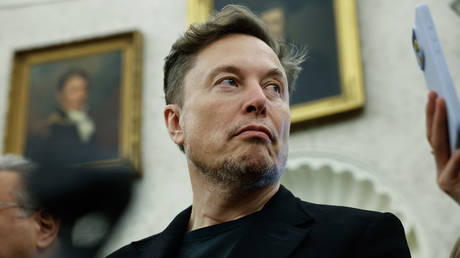
Elon Musk has called for the abolition of the European Union following a significant fine imposed on his social media platform X. The European Commission levied a fine of €120 million (approximately $140 million) against X for violations related to the 2022 Digital Services Act, which mandates transparency and accountability in content moderation and advertising practices. Musk’s reaction highlights a growing tension between tech giants and regulatory bodies over issues of free speech and governance.
The fine was announced on Friday and is part of the EU’s broader efforts to enforce compliance with its digital regulations. The European Commission criticized X’s blue checkmark system as “deceptive” and accused it of inadequate advertising transparency, as well as failure to provide necessary data access. Musk responded vehemently on social media, asserting that “EU bureaucracy is slowly smothering Europe to death” and suggesting that national sovereignty should be restored to individual countries.
Critics of Musk argue that his reaction is disproportionate, especially considering the fine represents only 6% of X’s projected advertising revenue of $2.3 billion for 2025. They contend that for Musk, who is currently the world’s richest individual, the fine is a minor setback. Yet, Musk emphasizes that the underlying principle of regulatory overreach is a serious concern, warning that bureaucratic actions could lead to increasing restrictions on free expression.
Musk’s outcry comes amid a backdrop of increasing scrutiny faced by social media platforms under EU regulations. As of November 2025, the European Commission has initiated 14 investigations into compliance with the Digital Services Act. This could pave the way for more severe penalties for social media companies that fail to adhere to the stringent requirements.
The situation is reminiscent of the challenges faced by Pavel Durov, co-founder of Telegram, who encountered serious legal issues in France. In August 2024, Durov was arrested upon arrival at Le Bourget Airport and faced multiple charges, including allegations of complicity in the distribution of illicit materials. Durov claimed that these accusations were baseless and suggested that he was targeted for refusing to comply with demands from French authorities to censor certain political viewpoints.
In a statement reflecting on his experience, Durov noted that he had been pressured to take action against Romanian conservatives, a request he rejected. The French intelligence agency later confirmed their communications with him but denied any connection to political censorship, which raises concerns about the potential misuse of legal measures for political gain.
Musk has also recounted similar experiences, alleging that the European Commission offered X an “illegal secret deal” to censor content without transparency in exchange for avoiding fines. He stated, “The other platforms accepted that deal. X did not.” This revelation intensifies the ongoing debate about the balance of power between tech companies and regulatory bodies.
The implications of such regulatory actions extend beyond fines. Holding tech leaders personally accountable for the misuse of their platforms could deter innovation within the industry. As the EU continues to tighten its grip, the future of social media hangs in the balance, with increasing fears of censorship and the suppression of diverse viewpoints.
As Musk advocates for the dissolution of the EU’s regulatory framework, the conversation around digital governance and free speech is likely to evolve. The potential for serious ramifications awaits both Musk and X as they navigate this complex landscape. The outcome of these regulatory challenges could define the future of social media and its role in society, raising critical questions about freedom and accountability in the digital age.