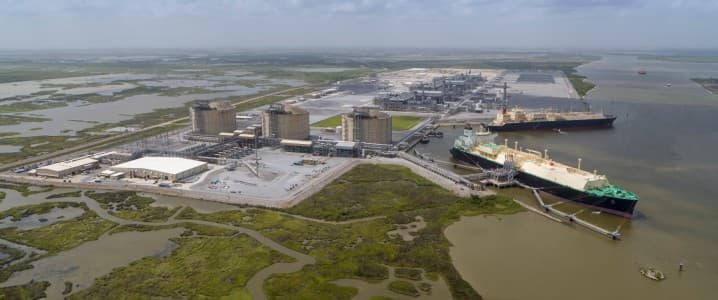
Asian countries are poised to significantly cut their imports of liquefied natural gas (LNG) this year due to escalating prices, which are forcing some nations to seek alternative energy sources while others enhance domestic production. In stark contrast, European nations are on track for another record year of LNG imports as demand surges, particularly from the United States.
Data from Kpler, referenced by energy columnist Clyde Russell, indicates that Asia’s total LNG imports for 2024 will reach approximately 276 million tons, following a robust November that saw imports at 22.99 million tons and an even stronger projection for December, potentially hitting 26.86 million tons. This marks a notable decline from 2023’s total of 287.8 million tons, representing the first annual decrease since 2022.
The situation in Europe tells a different story. The continent’s imports of LNG are accelerating, primarily sourced from the United States. Kpler’s earlier figures revealed that LNG flows into Europe averaged over 10 million tons per month during the first ten months of the year, amounting to 101.38 million tons for that period. As the heating season begins, demand is expected to remain high, with projections indicating that November could see record imports due to lagging gas storage levels.
While the United States anticipates a 40% annual increase in LNG exports driven by European demand, the EU’s gas storage remains below targets. Currently, the total EU gas storage is at 75%, far short of the 90% target. Germany, Europe’s largest LNG importer, reports an even more concerning 66.74% storage capacity, with withdrawals consistently outpacing injection rates.
This dynamic means Europe will continue to influence global LNG prices, leading Asian importers to seek cheaper alternatives or enhance their domestic supply. China, once the world’s largest LNG importer, is redirecting its focus towards pipeline gas from Russia and increasing domestic natural gas production, resulting in more LNG becoming available for other Asian markets. However, the high price of LNG continues to deter many importers.
According to Russell, LNG prices for delivery to North Asia dropped last week to $10.90 per million British thermal units (mmBtu), down from $11.66 per mmBtu the previous week. Despite this decrease, prices have not dipped below $10 per mmBtu since April 2024, making it difficult for several Asian countries to justify purchases, particularly those that committed to buying more U.S. energy commodities as part of trade agreements.
Europe finds itself in a challenging position. While Asian nations may ramp up coal power generation, European countries have largely abandoned coal and must continue to import gas, regardless of price. The latest Purchasing Managers’ Index (PMI) reading for the eurozone indicates a contraction at 49.6, with job losses accelerating in November. The corporate sector has long cautioned about the adverse effects of high energy prices on economic growth, particularly amid ongoing sanctions against Russia, a former key supplier.
As the global LNG market evolves, Kpler anticipates Europe’s total LNG imports for 2024 to reach 123.99 million tons, nearly matching the record levels of 124.6 million tons seen in 2022 and 2023. In November alone, Europe imported 11.89 million tons of LNG, significantly boosting U.S. exports.
The shifting landscape reveals a growing interdependence between Europe and the United States in the LNG trade. In stark contrast to the robust exports to Europe, U.S. LNG shipments to Asia remain limited, with November figures at just 1.43 million tons, compared to 6.90 million tons sent to Europe.
Looking ahead, most forecasts suggest a potential price drop in LNG as new export capacities come online, particularly in the United States. However, the operators of these facilities will also require profitability, which may create a price floor. The pressing question remains: how long can Europe sustain high LNG prices before recalibrating its energy strategy, and what will become of the newly established LNG capacities thereafter?