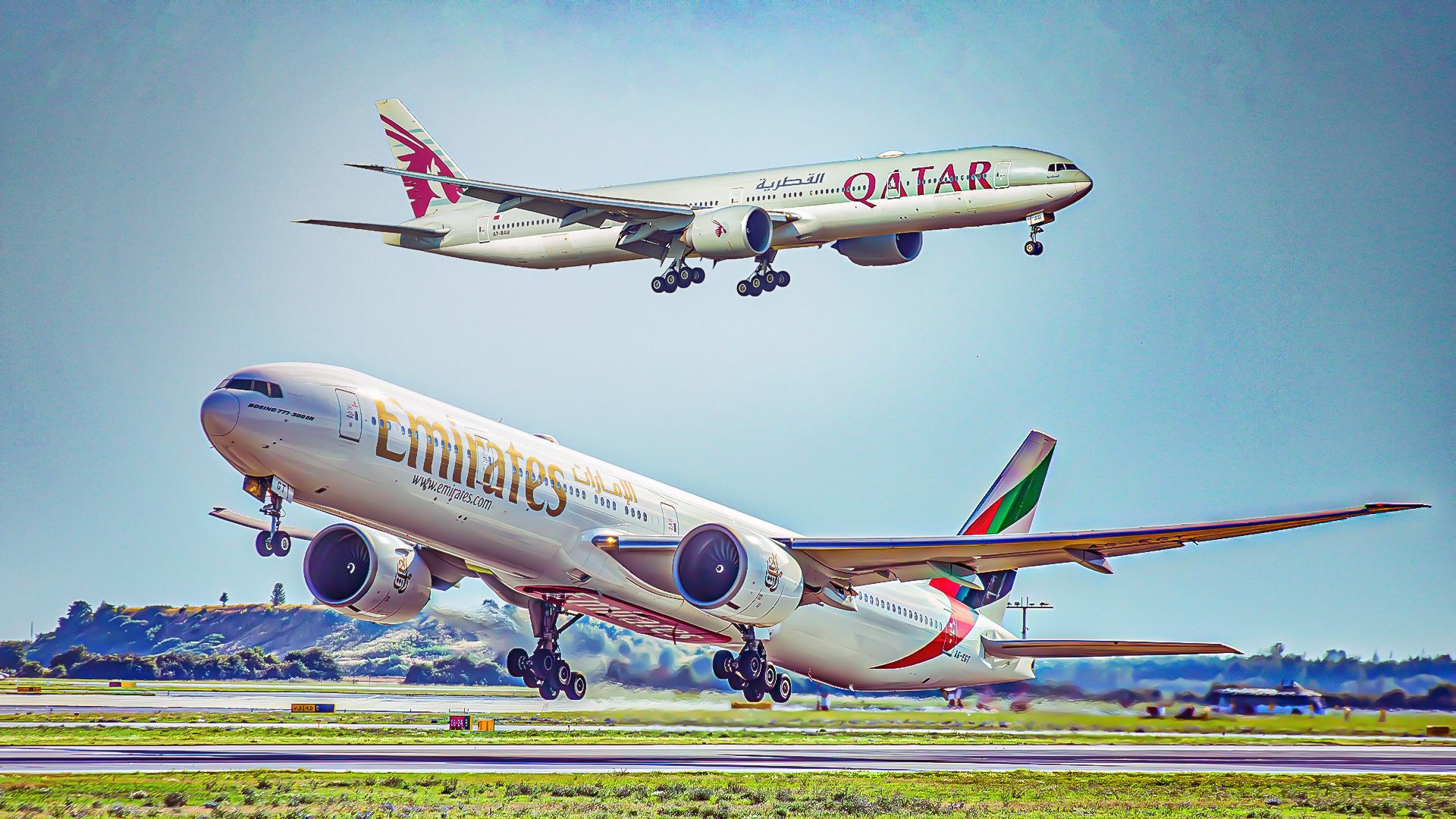
UPDATE: Emirates and Qatar Airways are currently engaged in a fierce competition for dominance in the Boeing 777 fleet, with implications for global air travel. As of 2025, Emirates operates a staggering 140 Boeing 777s, while Qatar Airways flies a total of 92 777s, raising urgent questions about their respective strategies and passenger experiences.
Both airlines have relied heavily on the “Triple Seven” for over two decades, using it to connect Europe, Asia, Africa, and the Americas through their hubs in Dubai and Doha. The ongoing debate centers around which airline has the edge in fleet size, passenger experience, and cargo capabilities.
Emirates leads the charge with its impressive fleet, which includes 119 777-300ERs and a combination of freighters, making them a powerhouse in high-demand markets. Their 777-300ERs are crucial for long-haul flights, linking Dubai to key global cities. The airline’s innovative use of these aircraft allows it to maintain competitive pricing and efficiency in high-traffic areas.
Conversely, Qatar Airways has carved out a niche with its smaller, yet highly effective fleet. Operating 57 777-300ERs and a robust group of 28 777-200F freighters, Qatar focuses on maximizing the performance of each aircraft, particularly for cargo operations. Their ability to adapt to market demands positions them favorably in the competitive landscape.
“The Boeing 777 has become a core tool for connecting our hubs to the rest of the world,” said an Emirates official.
Both carriers utilize their 777 fleets differently. Emirates prioritizes capacity and cargo capabilities, while Qatar emphasizes premium passenger experiences with features like the acclaimed Qsuite business class on many 777-300ERs. This strategic difference highlights the airlines’ distinct approaches to service and operational efficiency.
Passenger experiences also vary significantly between the two airlines. Emirates’ economy class often features a denser 3-4-3 seating layout, maximizing capacity but potentially compromising comfort. In contrast, Qatar Airways offers a mix of nine-abreast and ten-abreast seating, providing a more spacious environment when available.
The ongoing competition between Emirates and Qatar Airways is not just about numbers; it reflects broader trends in the aviation industry. Both airlines are adapting their fleets as they prepare for the next generation of aircraft, including the incoming 777X, which promises to redefine long-haul travel.
As both carriers continue to push the limits of the Boeing 777, the implications for travelers are significant. With both airlines expanding their networks and enhancing their offerings, passengers stand to benefit from increased options and improved service standards.
The showdown between Emirates and Qatar Airways emphasizes the critical role of strategic fleet management in global aviation. As the battle for Boeing 777 supremacy unfolds, it is clear that both airlines are committed to providing exceptional service and connectivity for travelers worldwide.
Stay tuned for further updates on this developing story, as the aviation landscape continues to evolve with these two giants leading the charge.