South Korea’s Samsung SDI has announced its first lithium iron phosphate (LFP) cell supply agreement in the United States, while China-based Trina Storage has expanded its collaboration with Lightshift Energy. Both companies revealed their new agreements on December 10, 2023, marking significant moves in the battery energy storage system (BESS) sector.
Samsung SDI stated that its Michigan-based subsidiary, Samsung SDI America, signed a contract to supply domestically manufactured LFP cells for BESS applications with an undisclosed customer. The agreement spans three years, commencing in 2027, and is valued at over KRW2 trillion (approximately US$1.36 billion). The prismatic cells involved in this deal have been developed through extensive research and development efforts.
Earlier this month, Samsung SDI disclosed plans to initiate mass production of these LFP cells before the end of 2025, aiming for an annual production capacity of 30GWh for energy storage batteries by the end of next year. Media reports have speculated about a potential multi-year, multi-gigawatt-hour BESS supply agreement between Samsung SDI and Tesla, but these claims remain unverified. The growing demand for stationary grid storage in the U.S. suggests that various potential clients exist, making it unlikely that Tesla is the sole candidate for this contract.
Samsung SDI’s announcement also raised questions regarding whether the deal includes complete BESS solutions. Such an arrangement might not align with Tesla’s business model, as the company produces its own Megapack products utilizing third-party battery cells. Samsung SDI has emphasized its commitment to energy storage systems as a central focus for future growth.
The U.S. battery market is increasingly influenced by recent legislation aiming to limit the use of Chinese-made products in domestic projects. A consultant, speaking anonymously due to the sensitive nature of the topic, highlighted that upcoming regulations will restrict tax credit incentives for projects utilizing Chinese materials, particularly affecting cells, which are a significant cost component.
Samsung SDI positions itself as the only non-Chinese manufacturer capable of supplying U.S. customers with prismatic LFP cells, which simplifies integration for system developers accustomed to Chinese products. The company has touted safety features in its designs, including an aluminum casing and proprietary No Thermal Propagation (No TP) technology, which enhances thermal insulation between cells.
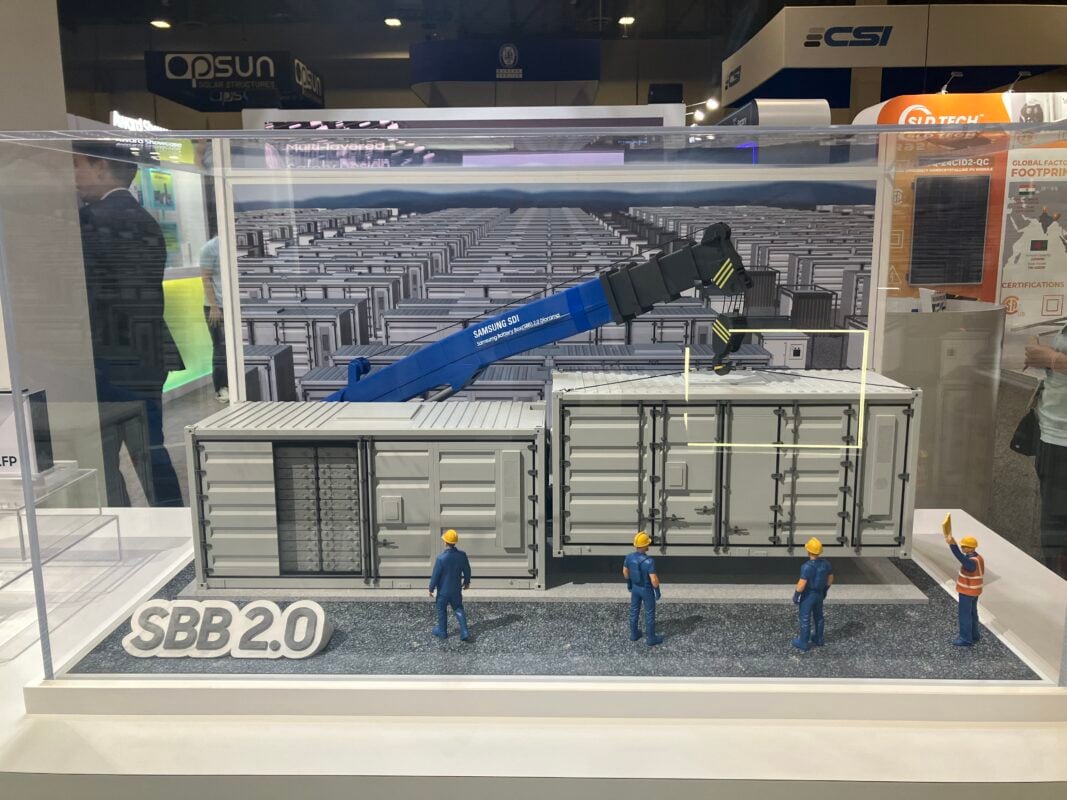
In conjunction with cell production, Samsung SDI plans to manufacture complete, integrated BESS solutions within the U.S. The company showcased its latest products at the RE+ clean energy trade show in Las Vegas in September, featuring advanced designs that utilize nickel cobalt aluminum oxide (NCA) cells.
On the other hand, Trina Storage has enhanced its strategic partnership with Lightshift Energy, agreeing to supply equipment for a portfolio of projects exceeding 1GWh. Trina Storage will provide its Elementa 2.0 and Elementa 2.5 BESS solutions to Lightshift, a developer and operator previously known as Delorean Power.
Chinese firms, including Trina, still have a significant number of projects that qualify for tax credits due to prior progress. Some industry sources suggest that Chinese-made batteries might be competitively priced, leading large customers with strong financial positions to opt for these products despite potential tax credit issues. Moreover, Chinese companies may explore options to comply with regulatory requirements by manufacturing domestically or in compliant countries.
Trina Storage has primarily operated as a system integrator, utilizing its in-house LFP cells for projects in China while sourcing third-party cells for international initiatives. The company completed its first U.S. projects in 2024, responding to a solicitation by the Massachusetts Municipal Wholesale Electric Company (MMWEC), which serves multiple municipal utilities in New England.
Lightshift Energy plans to develop a 16MW/52MWh system scheduled to be operational in early 2026, following several successful projects. The ongoing collaboration between Samsung SDI and Trina Storage underscores the growing importance of energy storage solutions in the evolving landscape of renewable energy and grid management.