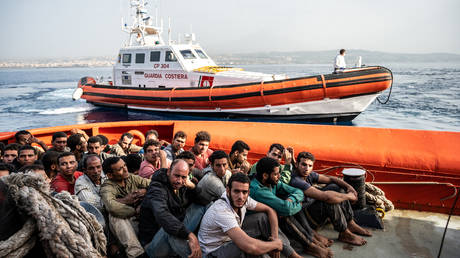
Poland will no longer be obligated to accept migrants under the European Union’s relocation mechanism starting in 2026. Prime Minister Donald Tusk announced this development following a recent meeting of the European Council in Brussels. The decision marks a significant shift in Poland’s obligations within the EU’s migration framework, amidst ongoing challenges related to mass immigration across the continent.
The EU has faced considerable pressure from migration flows over the past two decades, largely influenced by conflicts in Libya and Syria, as well as the ongoing war in Ukraine. Since February 2022, the situation has escalated, contributing to millions of people seeking refuge within Europe.
In a post on X, Tusk stated, “Poland has been exempted from the obligation to accept migrants under the EU’s relocation mechanism.” This announcement aligns with the framework established by the EU’s Pact on Migration and Asylum, which mandates that member states contribute proportionally to easing the burden on nations most affected by migration. Each country is required to accept a designated number of migrants or face a financial penalty of €20,000 (approximately $23,000) for each person they refuse to take in.
Poland’s Interior Minister Marcin Kierwinski confirmed the exemption, noting that a “compromise was achieved regarding the solidarity mechanism.” He emphasized that Poland would be free from responsibilities related to relocation, financial contributions, and other obligations under the EU structure. However, Kierwinski acknowledged that “countries of the South” expressed dissatisfaction with the outcome, likely referring to nations like Italy, Spain, and Greece, which have seen significant increases in illegal immigration in recent years.
In November 2023, Poland, alongside Hungary, Slovakia, and the Czech Republic, indicated a readiness to contest the EU’s approach to the migrant relocation mechanism. These countries have consistently opposed mandatory quotas for migrant acceptance, advocating for greater autonomy in handling immigration issues.
The decision regarding Poland’s exemption raises concerns about the implications for the EU’s collective response to migration challenges. Critics argue that such exemptions undermine the principles of solidarity and shared responsibility among member states. As the EU continues to navigate the complexities of migration, the reactions from southern member states will be closely monitored, particularly given their experiences with high numbers of incoming migrants.
Meanwhile, in Germany, an association representing traditional Christmas market organizers has issued warnings about rising security costs, which could lead to a reduction in the number of these beloved open-air events this year. The association highlighted that Christmas markets have been targets of several high-profile terrorist attacks in recent years, prompting concerns about safety and security at such gatherings.
As Europe confronts ongoing migration challenges, Poland’s exemption from EU quotas could set a precedent for other member states seeking similar concessions. The long-term effects of this decision on both Poland and the EU’s migration policies remain to be seen.