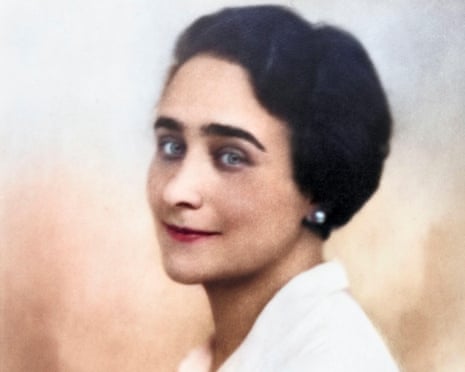
In a significant literary revival, Gabriele Tergit’s novel, The Effingers, is now available in English thanks to the translation by Sophie Duvernoy. Originally published in 1951, this work offers a poignant exploration of Jewish life in Berlin before the rise of the Nazi regime, capturing the complexities of a vanished world.
Tergit, a Jewish author, returned to Berlin in 1948 after years of exile. Once a prominent figure in the city’s vibrant interwar journalistic landscape, she witnessed the profound transformation of her hometown. Following the Nazi ascent to power, Tergit fled Germany, ultimately settling in London, where she remained until her death in 1982. Upon her return to Berlin, she found herself disconnected from the postwar literary scene and struggled to find an audience for The Effingers, her magnum opus that chronicles the lives of the Effinger family across four generations.
The novel traces the journey of the Effinger family, Jewish industrialists who navigate Berlin’s high society from the prosperous 1870s to the turbulent 1930s. Central to the narrative is Paul Effinger, who ventures to Berlin to establish his career in industry. He marries into the esteemed Oppner-Goldschmidt family, paralleling his brother Karl‘s journey into elite circles.
Capturing a Complex Era
Tergit’s narrative encapsulates the golden age of assimilated Jewish life in Berlin, a time marked by rapid population growth, technological advancements, and increasing social inequality. The interwar period serves as a backdrop for the family’s experiences, as rising antisemitism and political instability foreshadow the coming catastrophe.
The author employs a distinctive style, using short, dialogue-driven chapters that provide varied perspectives. Her storytelling refrains from overt authorial commentary, instead revealing her insights through the lives and interactions of her characters. Tergit’s approach allows readers to witness the shifting dynamics of a society grappling with modernity, morality, and identity.
The novel paints a vivid social portrait of pre-Nazi Berlin, with meticulous descriptions of fashion, food, and the cultural milieu of the time. As characters engage in intellectual debates, Tergit highlights the conflicting ideologies that permeated Jewish thought, including nationalism, socialism, and liberal ideals.
A Rejection of Fatalism
Tergit’s work challenges the notion of Jewish inevitability in the face of tragedy. In a letter to a publisher in 1949, she described The Effingers as “not the novel of Jewish fate, but rather a Berlin novel in which very many people are Jewish.” This perspective asserts a claim on Berlin as a place for Jewish people, countering the fatalistic narratives that often dominate discussions of Jewish life in Germany.
The narrative also critiques the emerging Zionist nationalism, as represented by characters like Uncle Waldemar, who defends assimilated Jewish identity against the backdrop of rising ethnic nationalisms. This critique reflects Tergit’s own experience; like her character Lotte, she visited Palestine in 1933, feeling a disconnect with those who prioritized nationalist ideologies over cultural connections.
In presenting the complexities of Jewish existence in a rapidly changing society, The Effingers refrains from simplistically framing the rise of fascism as a fairy tale of evil triumphing over good. Instead, Tergit illustrates it as a culmination of various desires and ideas that drew individuals into the fascist movement.
As readers engage with this richly detailed narrative, they are invited to reflect on the broader implications of identity, belonging, and the historical forces that shape our communities. With its recent translation, The Effingers: A Berlin Saga by Gabriele Tergit is now published by Pushkin Press, priced at £20, reaffirming Tergit’s place as a vital voice in German literature.