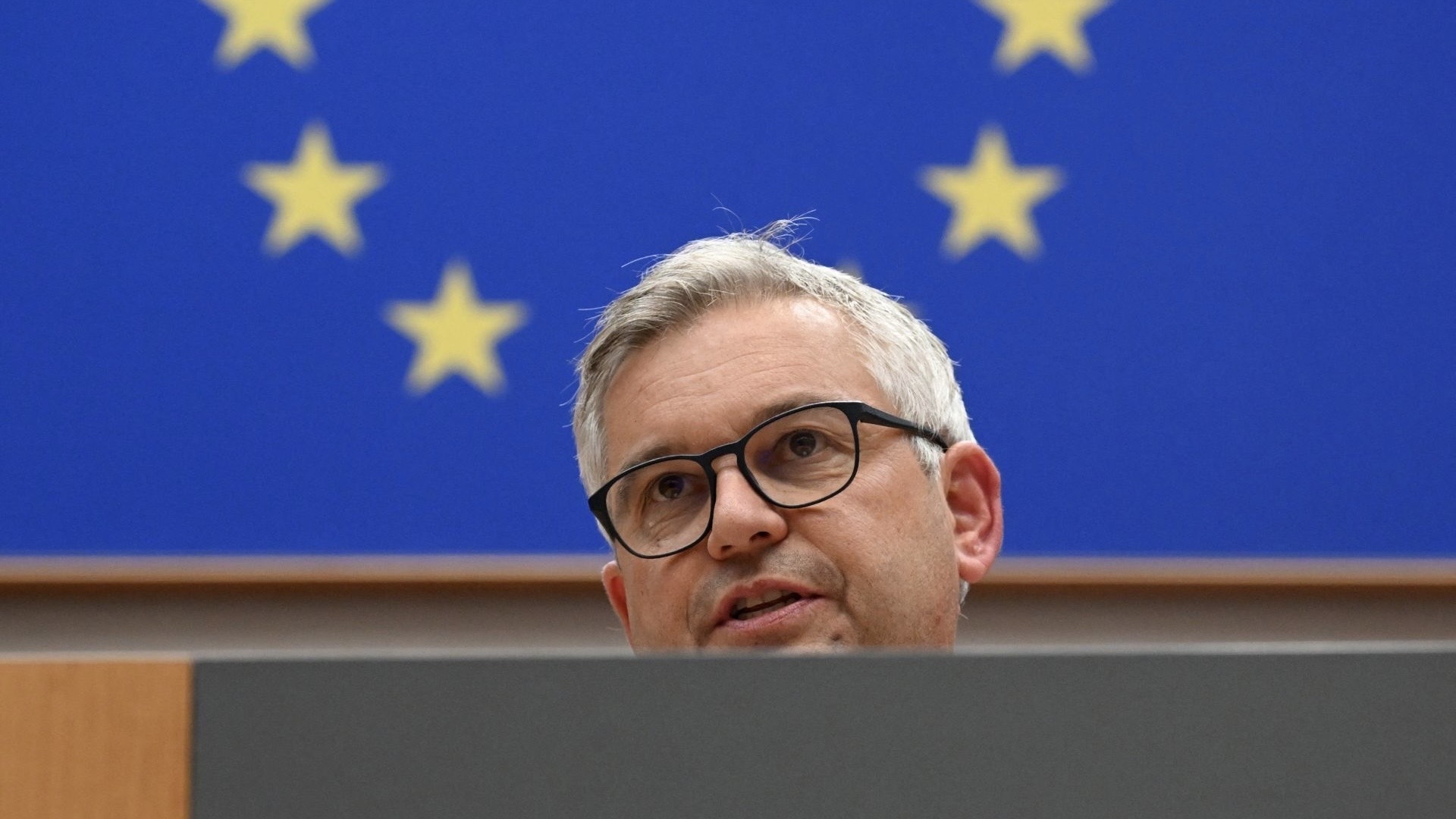
The European Union is moving forward with the controversial Child Sexual Abuse Regulation (CSAR), as EU Commissioner for Home Affairs Magnus Brunner expressed support for the European Parliament’s position on targeted monitoring measures. This development comes as the trilogue negotiations are set to commence on December 9, 2023, following the EU Council’s recent approval of the regulation.
During a session of the Committee on Civil Liberties, Justice and Home Affairs (LIBE) on December 4, Brunner highlighted a key shift in his stance. While he reaffirmed his commitment to the original proposal presented by the European Commission in 2022, he indicated a preference for the Parliament’s targeted scanning approach over the Council’s broader, voluntary scanning framework. “I would prefer the Parliament position to the Council position, because the Council position is a compromise of a compromise of a compromise,” Brunner stated, emphasizing his belief that the Commission’s proposal remains the strongest option.
Despite his advocacy for targeted measures, Brunner notably rejected the term “Chat Control,” which critics have used to label the initiative. He addressed privacy concerns raised by Markéta Gregorová of the Czech Pirate Party, who likened voluntary scanning to forcing citizens to submit their private correspondence for police scrutiny. “It’s not about Chat Control, it’s about protecting our children, it’s about fighting against the pedophiles,” Brunner countered.
Negotiations Ahead
As the trilogue negotiations approach, Javier Zarzalejos, Chair of the LIBE Committee and Rapporteur, underscored the Parliament’s strong mandate for targeted measures. He expressed confidence in the Parliament’s capacity to navigate the complex discussions ahead, stating, “The Parliament is well-equipped.”
While the bill has gained the necessary majority within the EU Council, it faces significant opposition from several member states, including Italy, the Czech Republic, Poland, and the Netherlands. Many experts caution that the current proposals may lead to severe privacy infringements. The Danish Presidency’s decision to eliminate mandatory scanning for all messaging providers has not alleviated concerns regarding the implications of voluntary scanning.
Critics like Gregorová have voiced apprehensions about the potential for mass surveillance, stating, “Voluntary or not, mass scanning is still mass scanning of private communications. And it does not help minors.” This sentiment reflects a broader unease among digital rights advocates who fear that any form of scanning could undermine privacy rights.
Brunner’s endorsement of targeted monitoring offers a potential pathway for those advocating for digital rights. Patrick Breyer, a former Member of the European Parliament and digital rights expert, commended Zarzalejos for rallying parliamentary support. “With this strong mandate for fundamental rights and against indiscriminate surveillance, the Parliament is well-equipped to fend off the governments’ attack on digital secrecy and the right to anonymous communication,” Breyer remarked.
As the negotiations begin, all eyes will be on the outcomes that could shape the future of digital privacy and child protection in the European Union. The balance between safeguarding children and preserving individual privacy remains a contentious issue that will require careful consideration in the coming discussions.