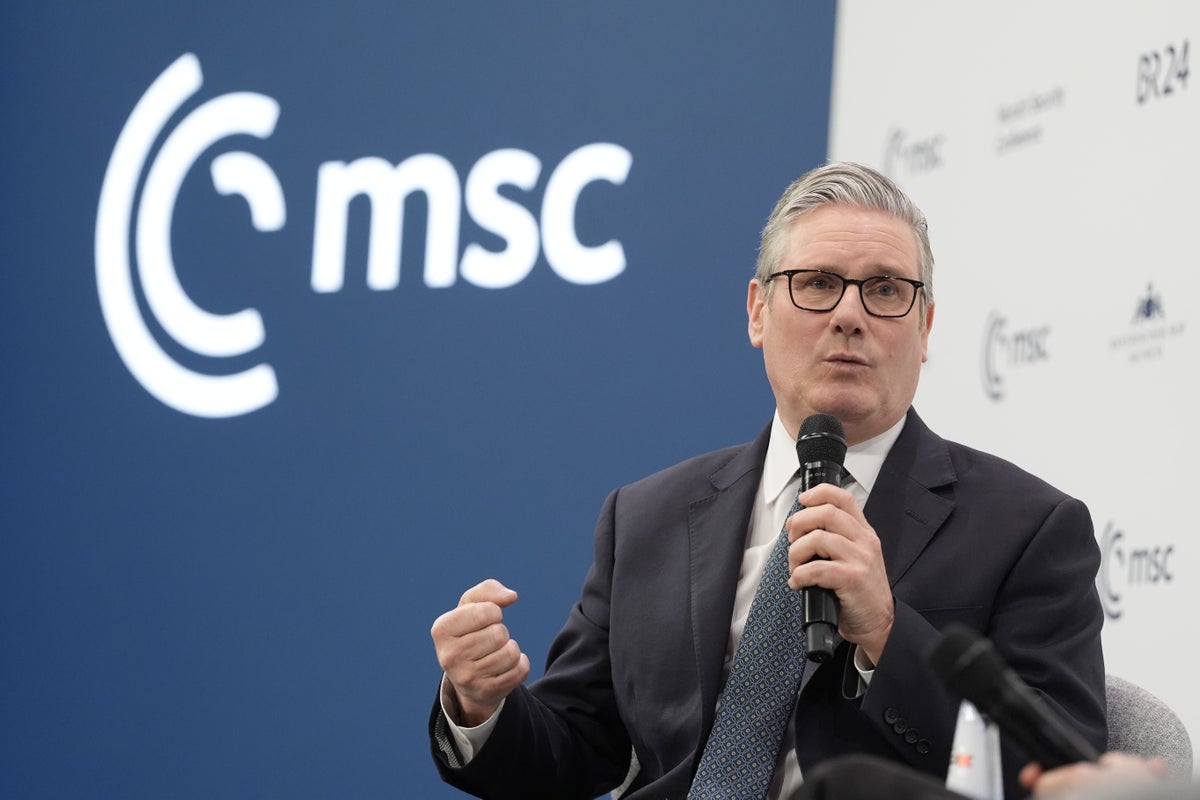
Sir Keir Starmer, the leader of the UK Labour Party, delivered a significant address at the Munich Security Conference, advocating for enhanced cooperation between the United Kingdom and its European neighbours. His remarks, which included reflections on his leadership amid domestic challenges, emphasized the importance of a united European stance in the face of global threats.
In his speech, Starmer asserted that he had “ended the week much stronger than I started it,” suggesting a renewed confidence in his leadership. He called for “greater European autonomy” in defence matters, while clarifying that this does not imply a withdrawal of US support but rather a necessary shift towards burden-sharing among NATO members. His comments came against a backdrop of growing geopolitical tensions, particularly following recent aggressions from Vladimir Putin.
Defence Cooperation and European Unity
Starmer’s address struck a careful balance. He recognized the bluster of former US President Donald Trump while highlighting the need for Europe to bolster its own defence capabilities. He reminded the audience that NATO allies had previously come to each other’s aid, referencing the situation concerning Greenland and the sacrifices made by UK forces in Afghanistan.
One notable aspect of his speech was a strong warning regarding the threats posed by Putin’s Russia. Starmer drew a parallel to the pre-World War II era, stating, “In the 1930s, leaders were too slow to level with the public about the fundamental shift in mindset that was required.” While many agree on the urgency to respond to current threats, comparisons to Nazi Germany may be seen as excessive. Such rhetoric risks undermining the call for increased defence spending, which he rightly promoted.
Starmer also criticized political factions on both the left and right, warning against “the peddlers of easy answers.” He took the opportunity to attack the Green Party and the Reform Party for their perceived leniency towards Russia and their weak stance on NATO, suggesting that a stronger case for European defence should stand on its own merits.
Vision for Future Cooperation
Despite these criticisms, the core of Starmer’s speech was a compelling argument for enhanced European defence cooperation. He urged for a “generational shift in defence industrial cooperation” and advocated for closer economic ties between the UK and the European Union. He stated, “The prize here is greater security, stronger growth for the UK and the EU, which will fuel increased defence spending, and the chance to place the UK at the centre of a wave of European industrial renewal.”
Starmer’s vision extends beyond defence. He emphasized that the UK is moving beyond the isolationist mentality that characterized the Brexit years. “In a dangerous world, we would not take control by turning inward – we would surrender it,” he remarked. This perspective points to a more collaborative future rather than reopening divisive debates from the past.
As the political landscape continues to evolve, the implications of Starmer’s call for closer European cooperation will resonate in both domestic and international arenas. His approach at the Munich Security Conference reflects a strategic pivot towards fostering alliances that could significantly impact the UK’s defence and economic strategies moving forward.