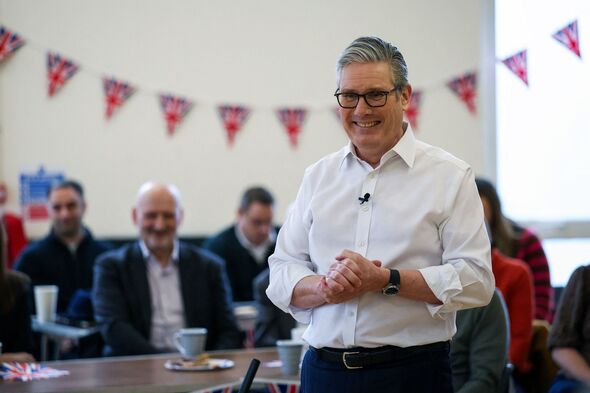
Recent polling data reveals a disconnect between the Labour Party’s leadership and voter sentiment in the United Kingdom. A YouGov survey conducted last Wednesday indicates that only 24% of voters support Prime Minister Keir Starmer continuing in his role. This figure raises questions about the party’s ability to address the growing dissatisfaction among the electorate.
Labour ministers have been vocal in their insistence that the public desires a stable government focused on pressing issues. They argue that citizens are weary of political upheaval, echoing sentiments that the party should “get on with the job.” Yet, evidence suggests otherwise. A parliamentary petition calling for an immediate general election has gathered over one million signatures, compelling parliament to debate the matter. This level of public engagement indicates a significant appetite for change rather than continuity.
According to data from Ipsos, a staggering 71% of respondents believe that the UK is heading in the wrong direction. Such sentiments are reflected in the Labour Party’s plummeting poll ratings. If an election were to take place today, Labour could struggle to secure even 20% of the vote, while the Reform Party appears poised to gain a substantial majority.
The portrayal of a unified public yearning for stability seems increasingly dubious. The narrative of voters wanting to move past political drama does not align with the growing calls for significant change. The comparison to a soap opera is particularly striking; just as audiences seek compelling storylines filled with conflict and resolution, voters appear to be drawn to the unfolding political drama rather than a stagnant status quo.
In examining the current political landscape, parallels can be drawn with historical events. The story structure of a classic narrative involves a clear beginning, a chaotic middle, and a resolution. The situation faced by the Labour government resembles that of the Titanic—facing an iceberg with no clear path to recovery. As the chaos escalates, it becomes increasingly apparent that the leadership of Keir Starmer may not be able to steer the party to safety.
Political observers note that prime ministers rarely depart office voluntarily. Since the end of World War II, only Harold Wilson has left on his own terms, influenced by health concerns. All others have been forced out due to electoral defeat or party pressure. As the current climate continues to deteriorate for Starmer, it is likely that he will face similar challenges.
In conclusion, the prevailing sentiment among voters suggests a desire for a new direction, rather than a continuation of the current leadership. With a significant portion of the electorate expressing dissatisfaction, Labour’s ministers may need to reconsider their approach and engage more effectively with the public’s demand for change. The unfolding political drama may indeed lead to a new chapter in the UK’s governance.