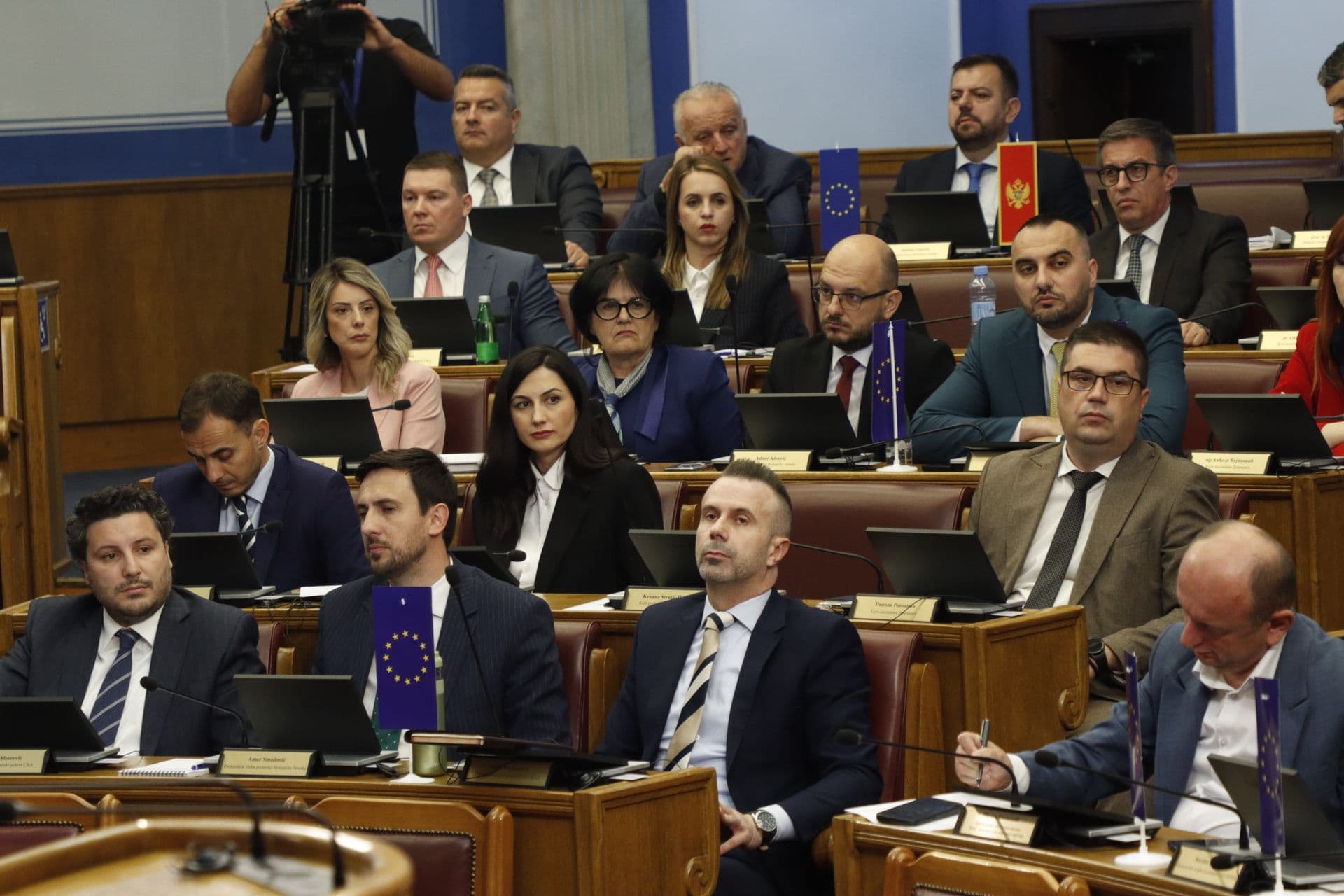
In Montenegro, the government is set to allocate over €18 million to political parties by the end of the year, as part of its financial support to the political landscape. As of January 2023, there were 79 political entities registered in the country, but only 23 parties currently have representatives in the national parliament, making them eligible for state funding.
Last year, these 23 political parties received a total of €12 million in two installments, with €7.56 million paid out and the remaining €4.44 million to be dispersed this year. This amount is in addition to the €13.83 million earmarked for political parties in the current budget. The funds do not include resources obtained through budget allocations intended for the operation of state and local parliaments.
Funding Breakdown and Political Landscape
According to the Agency for Prevention of Corruption (ASK), most of the political entities registered do not require mandatory contributions from their members, which would help finance their regular activities. Established parties such as the Social Democratic Party, the Democratic Party of Socialists, and the Socialist People’s Party have long relied on these contributions, setting fixed membership fees ranging from €5 to €20, depending on the party or member position.
Some parties claim that membership fees are voluntary, leading to a lack of precise definitions of contribution amounts. This situation indicates that many political structures, especially citizen groups and local initiatives, primarily depend on alternative funding sources or voluntary efforts.
Among the 79 political entities, the 23 that receive regular funding from the state benefit significantly due to their parliamentary positions. This year’s funding is expected to increase substantially because of new legislative regulations that have allowed these parties to access 0.8% of the total planned budget, which is estimated at €3.79 billion for the year.
Impact on Minority Parties and Budget Increases
Comparative data from the monthly budget allocations for the operational funding of political entities in 2025 and 2026 show significant increases, with some experiencing rises of up to 130%. Specifically, smaller entities are witnessing the most substantial relative increases, while larger parties and coalitions are also enjoying steady growth in their financial inflows.
For instance, minority parties such as the Croatian Civic Initiative and the Democratic Party are set to see their monthly funds rise from between €2,800 and €18,600 last year to between €6,400 and nearly €43,000 in 2026. Other minority coalitions, while experiencing smaller increases, have seen their monthly allocations grow by approximately 113%.
The Socialist People’s Party (SNP) has also noted a significant rise, with monthly funding increasing by 105% from €28,805 to €59,127. Conversely, the Bosniak Party recorded the smallest percentage increase at 80%, bringing its monthly funding to €95,432.
The coalition of the Democrats and the Civic Movement URA, which split into a ruling party and an opposition party shortly after elections, will receive nearly 70% more funding in 2026 compared to 2025. The ruling Democrats will receive €89,992 monthly, an increase from €53,136, while the opposition URA will see its funding rise to €48,457 from €28,612.
The total monthly funds for four opposition parties—DPS, SD, DUA, and LP—have increased from €139,358 to €224,484, reflecting a growth of 61%. The Democratic Party of Socialists (DPS) will receive the largest portion, amounting to €181,725, up from €112,813.
Funding for women’s organizations within political parties has also seen a boost, with total monthly allocations growing from €63,818 to €67,507. Each coalition will receive an increased monthly amount, with notable adjustments for various parties.
Overall, the financial support for parliamentary parties and their members primarily comes from state funds, which are contributed by all citizens of Montenegro. While this system provides a basis for stable income, the fact that over two-thirds of political entities lack access to such funding raises questions about whose interests are truly represented in the political arena. The notion that politics could be a volunteer activity is hard to reconcile in today’s world, including in Montenegro.