
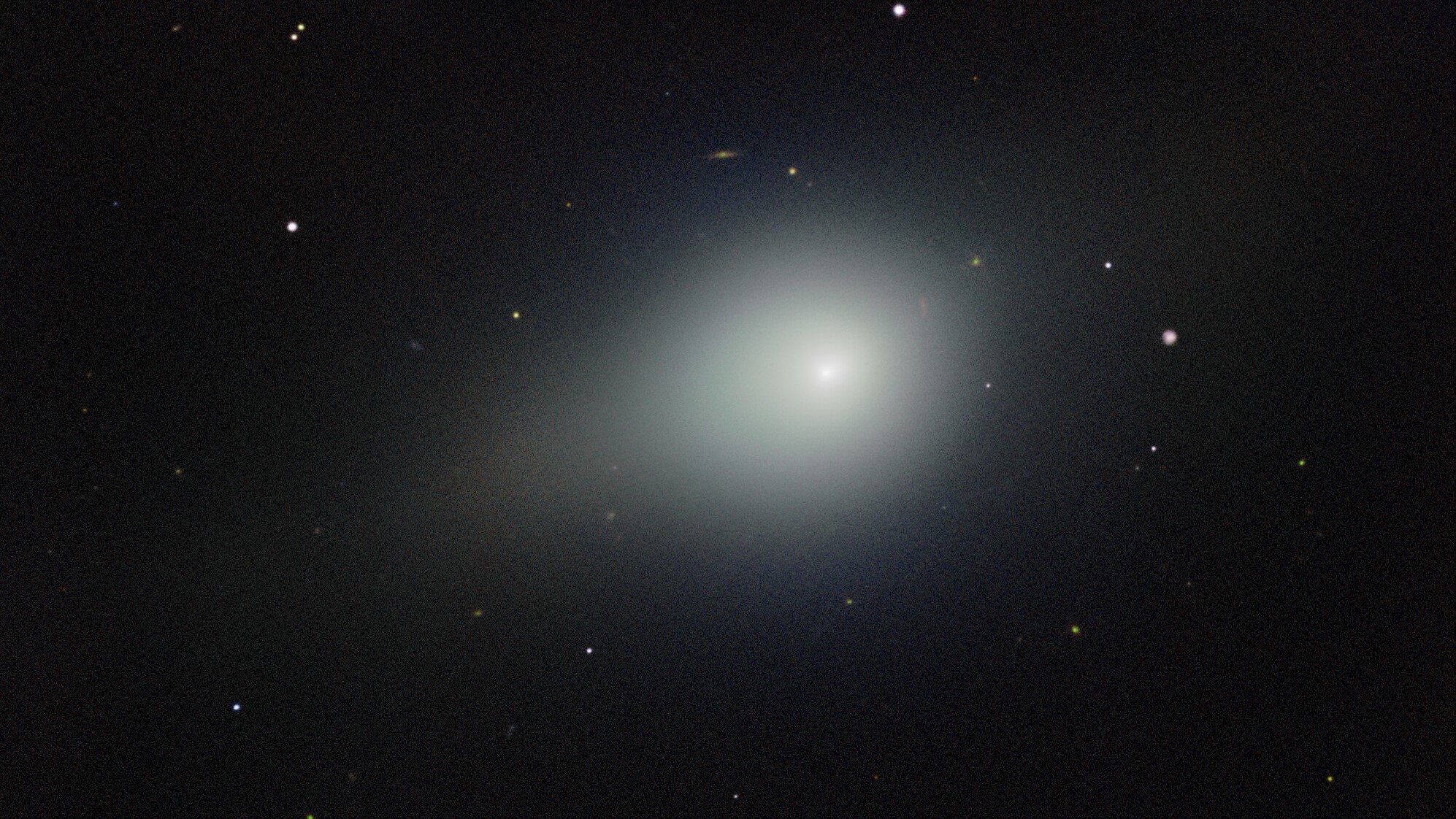
NASA has recently observed a remarkable increase in activity from interstellar comet 3I/ATLAS, as it exits the solar system. This unexpected flare, captured by the SPHEREx space telescope, has intrigued scientists and ignited fresh speculation about the comet’s origins. The new infrared data reveals that, instead of fading away after its closest approach to the Sun in December 2025, the comet unexpectedly released a substantial amount of gas, dust, and complex molecules.
The observations show a luminous coma surrounding the comet, abundant in water vapour, carbon dioxide, and organic compounds. A distinctive, pear-shaped dust tail formed as rocky material was ejected during this outburst, which scientists had not anticipated. Normally, comets become most active near perihelion, the point at which they are closest to the Sun, due to solar heating causing surface ice to sublimate. In the case of 3I/ATLAS, however, its most intense activity occurred well after this critical point.
Carey Lisse, lead author of the study, noted, “Rather than quietly dimming as it moved away, the comet became significantly brighter. Even water ice was rapidly turning into gas far from the Sun.” This phenomenon raises questions about the processes at play in such interstellar objects.
Discovered in July 2025 by the ATLAS asteroid survey, 3I/ATLAS is only the third confirmed interstellar object observed passing through the solar system. The first, 1I/’Oumuamua, detected in 2017, gained attention for its unusual shape and motion, while the second, 2I/Borisov, identified in 2019, exhibited behaviour more typical of comets. Despite the surge in activity fueling speculation about the object’s nature, astronomers maintain that 3I/ATLAS is a natural celestial body.
Some social media users have drawn parallels between the comet’s flare-up and a spacecraft “powering up” as it departs, echoing earlier discussions surrounding the possibility of artificial origins for interstellar objects. However, scientists assert that there is no evidence to support these theories. The leading explanation for the outburst lies beneath the comet’s surface.
Sunlight may have taken time to penetrate a hardened outer crust, eventually reaching ancient ice that had remained frozen for billions of years. Once warmed, these materials rapidly escaped into space, resulting in the observed outburst. The SPHEREx telescope, designed to operate in infrared wavelengths, is particularly adept at identifying not only dust but also a diverse range of molecules streaming from the comet, including methane, methanol, and cyanide. These substances are considered vital in the early stages of planet formation.
Since 3I/ATLAS originated beyond the solar system, its chemical composition provides a unique opportunity to compare local comets with icy bodies formed around other stars. Early findings suggest that many familiar ingredients are present, supporting the idea that the fundamental building blocks of planets may be prevalent throughout the Milky Way.
Scientists also believe that the comet’s extensive exposure to cosmic radiation during its interstellar journey has affected its surface characteristics. Over significant timescales, this radiation likely altered the comet’s surface, sealing off more pristine ice beneath. When solar energy finally reached these untouched layers, it triggered the sudden release of material observed by SPHEREx.
The findings from this study are set to be published in February 2026 in the Research Notes of the AAS. While comet 3I/ATLAS is now gradually fading as it journeys into deep space, scientists emphasize that its unexpected activity has provided valuable insights into the nature of interstellar objects. This event serves as a reminder of why such visitors continue to captivate both scientific interest and public imagination.


