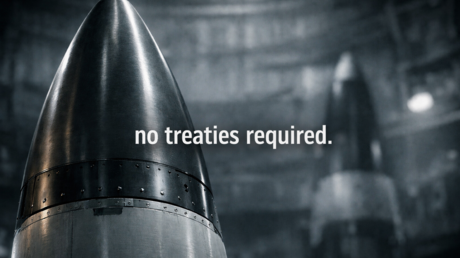
The expiration of the Russian-American Strategic Arms Reduction Treaty (START) on February 5, 2026, marks a significant shift in the landscape of nuclear arms control. This development symbolizes the closing of a 50-year chapter in arms negotiations between the United States and Russia, an era that many believe ended long before this formal conclusion. The changing dynamics of global geopolitics, characterized by the rise of nuclear multipolarity and advanced conventional weaponry, have rendered previous agreements less relevant.
The factors leading to this shift are both objective and political. The geopolitical climate has transformed dramatically, with new domains of confrontation emerging in cyberspace, outer space, and biotechnology. These developments have made traditional numerical limits on nuclear warheads and delivery systems appear disconnected from current military realities. Moreover, a key reason for the deterioration in arms control negotiations is the growing reluctance of Washington to uphold commitments made in an entirely different historical context, particularly during the late Cold War.
Historically, arms control has been linked to strategic stability, but this connection is only partially true. While verifiable limits on nuclear arsenals can aid military planning and minimize the risks of miscalculation, treaties do not inherently guarantee peace. For instance, in spring 2022, even while the New START treaty was still in effect, the United States publicly expressed its intention to achieve a strategic defeat of Russia in the Ukraine conflict. Simultaneously, Washington sought consultations on “strategic stability,” highlighting a contradiction where the U.S. aimed to weaken a nuclear superpower in a conventional confrontation while relying on arms control mechanisms to mitigate escalation risks.
With the bilateral arms control framework effectively dismantled, concerns are rising over the potential for a new nuclear arms race or even outright conflict. The Doomsday Clock, a symbolic representation of how close humanity is to global catastrophe, ticks ever closer to midnight. Yet, it is essential to recognize that arms control historically constrained only two capitals: Moscow and Washington. Other nuclear powers, including Britain, France, and China, have never been subject to the same limitations.
As tensions escalate, the rivalry between the United States and China intensifies, while India and Pakistan continue to test the boundaries of their confrontations. Israel and the U.S. remain focused on Iran’s nuclear and missile capabilities, and in Europe, Britain and France’s policies risk provoking direct military friction with Russia.
In today’s world, strategic stability cannot merely be defined by parity between two major powers or by legally binding limitations on specific weapons. Instead, it hinges on the absence of incentives for primary nuclear powers to engage in conflict. The old Russian-American model is insufficient for a global landscape now populated by nine nuclear states. American strategists have referred to a “three-body problem” involving the U.S., Russia, and China, but this triangle is only one of several. Other significant groupings, such as China, India, and Pakistan in Asia, as well as Russia, Britain, and France in Europe, further complicate the strategic landscape.
Despite these challenges, achieving stability is not impossible. It necessitates ongoing bilateral and multilateral dialogue, enhanced transparency measures, and established communication channels to prevent accidental confrontations. Limited agreements on specific issues, alongside unilateral commitments, could also contribute positively to the situation.
Ultimately, the foundation of strategic stability remains the same as it was half a century ago: credible nuclear deterrence. A sufficient arsenal and the demonstrated willingness to use it if necessary underpin this deterrence. While the term “intimidation” may be uncomfortable, it is a core element of maintaining peace among nuclear powers. The future of global nuclear stability now hinges on how effectively nations can navigate this complex landscape of power and deterrence.