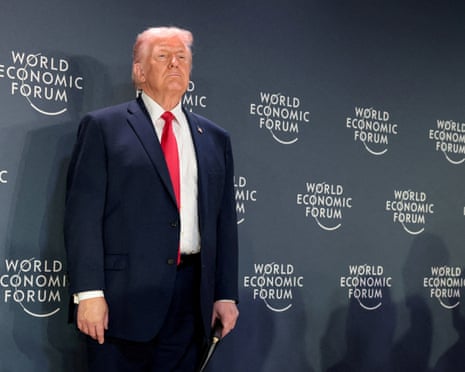
The actions and rhetoric of Donald Trump have raised significant alarm about the future of the international rules-based order. In recent weeks, Trump’s comments regarding British soldiers and his controversial stance on Greenland have highlighted a pattern of behaviour that many leaders now describe as threatening to global stability. Concerns are mounting among European leaders about how to counter Trump’s approach, which many perceive as an attempt to dismantle the current global framework that governs international relations.
At the heart of this situation is Trump’s ongoing tendency to act unilaterally, often disregarding established diplomatic norms. His recent bid to acquire Greenland, a territory of Denmark, exemplifies a broader trend of what critics label neo-imperial overreach. This move has not only provoked outrage in Denmark but has also sparked discussions about Arctic security, an area where cooperation among NATO allies is crucial. European leaders, including Ursula von der Leyen, President of the European Commission, have expressed that the international order is undergoing a seismic shift, warning that the implications could be permanent.
Despite these challenges, some analysts argue that the postwar world of great power dynamics remains largely intact. They suggest that the core rivalries and spheres of influence established in the years following World War II have not fundamentally changed, even in the face of Trump’s provocative actions. The historical context indicates that the rules-based order has often been a “take-it-or-leave-it” proposition for powerful nations, with the United Nations framework being selectively adhered to by its members.
The current crisis appears to stem primarily from Trump’s unpredictable leadership style, which has raised concerns not just in Europe, but among many Americans as well. Recent polls indicate that a substantial portion of the American public views Trump unfavourably, particularly in light of his handling of domestic issues, including the economy and immigration policies. His administration’s approach has led to a growing sentiment that Trump represents a significant deviation from the values traditionally associated with American leadership.
As the 2024 midterm elections approach, there is speculation about whether electoral outcomes could serve as a check on Trump’s influence. Many believe that a shift in Congressional power could help curb some of his more controversial policies. In addition, Trump’s erratic foreign policy decisions, including threats of tariffs and military actions, have heightened tensions not only with allies but also among adversaries.
The ongoing conflict in Ukraine underscores the need for a united front among NATO allies. Trump’s stance on issues such as Ukraine and the Middle East has often been met with resistance from European leaders, who are increasingly voicing their concerns regarding his approach. The urgency for Europe to bolster its own security and assert its values is becoming more pronounced, particularly in the face of what some diplomats have referred to as a “Rubicon moment.”
In light of these developments, there is a growing call for Americans to reassess their political landscape. Many believe that the time has come for the electorate to take decisive action to reclaim the values of democracy and international cooperation that have historically defined the United States. The situation presents an opportunity for a renewed commitment among citizens to engage in the political process and advocate for a more stable and predictable governance framework.
As this complex geopolitical scenario unfolds, the eyes of the world remain focused on the United States. The hope is that a collective effort from the American public will help restore a sense of order and responsibility in international affairs. The future of global diplomacy may depend on the actions of individuals at the ballot box, as they seek to address the challenges presented by a leadership style that many now view as a threat to both national and international stability.