The aviation industry may witness significant developments in 2027, with both Airbus and Boeing poised to launch new aircraft models. According to a report by global lessor Avolon, which was published on January 23, 2024, the anticipated aircraft include the Airbus A220-500, A350-2000, and Boeing’s 777-10X. These forthcoming models could play a pivotal role in shaping the next decade of aviation.
Avolon’s ‘Up Next’ report predicts that the aerospace sector will experience a surge in profitability, with industry profits expected to exceed $41 billion. This growth is attributed to ongoing economic recovery following the pandemic and lower fuel prices, which have provided a favorable environment for aircraft manufacturers. As demand for air travel continues to rebound, both narrowbody and widebody aircraft are on the drawing board.
New Designs on the Horizon
While specific details remain under wraps, various aircraft programs are reportedly in development at Airbus and Boeing. Critics have pointed out that Boeing has yet to deliver its 777X to customers. Nevertheless, the company is not deterred and continues to explore new possibilities. The Airbus A220-500, an extended version of the A220, aims to accommodate between 160 and 190 passengers. This variant is designed to fill the gap between the current A220 models and the A320neo, positioning it as a direct competitor to the Boeing 737 MAX 8.
If introduced, the A220-500 would feature a stretched fuselage and additional overwing exits, enhancing its fuel efficiency compared to its rivals. The entry into service for this model is anticipated within the next decade.
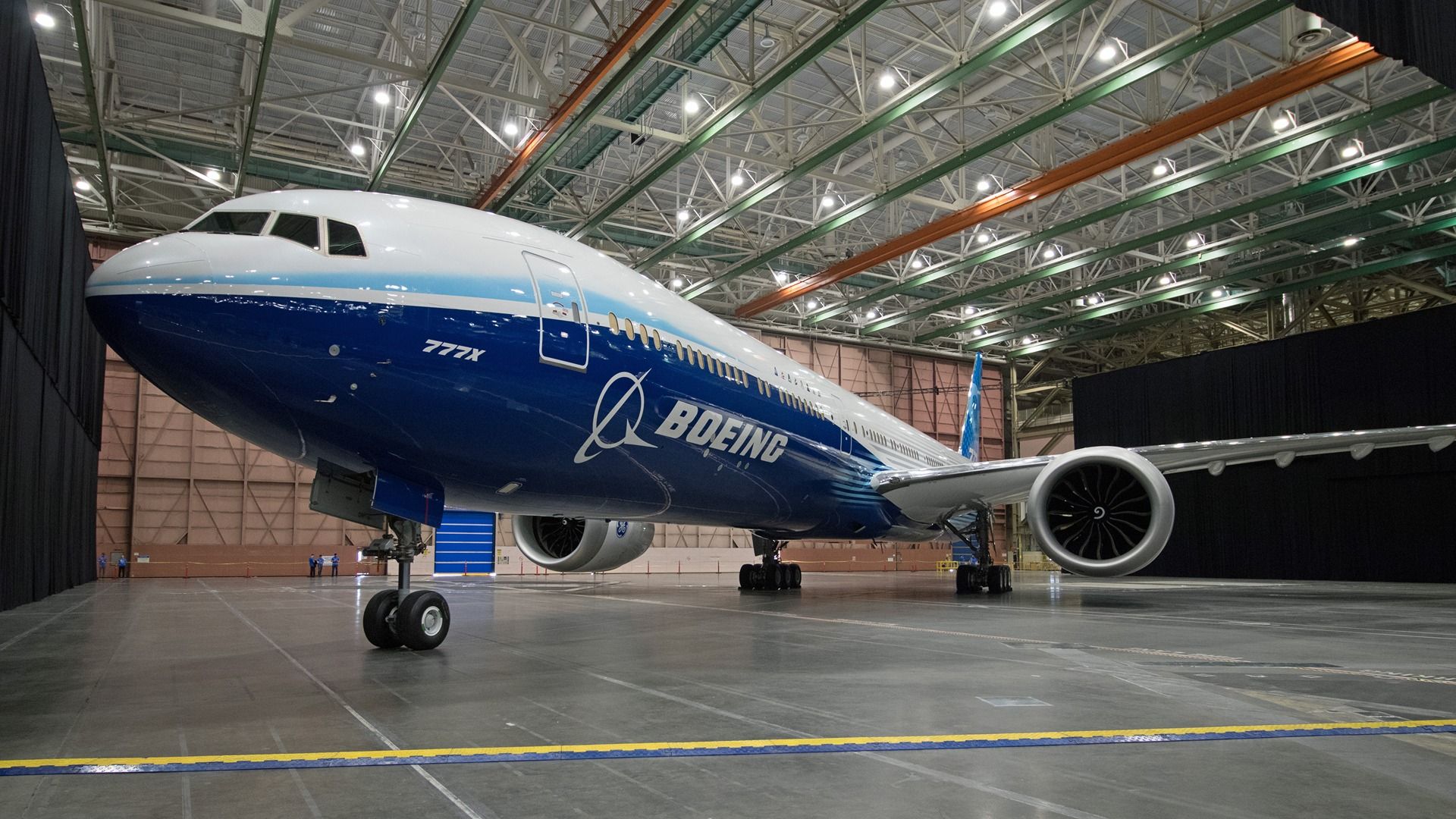
For Boeing, the proposed 777-10X represents a stretched variant of the 777X, with the capability to carry up to 450 passengers. This model could effectively replace the Airbus A380 and Boeing 747, adding approximately four extra rows compared to the 777-9. The 777-10X is expected to incorporate advanced features, including General Electric’s GE9X engines and folding wingtips.
Meanwhile, the Airbus A350-2000 could emerge as an ultra-high-capacity variant of the A350-1000, aiming to transport more than 400 passengers across several classes. This model would be the longest variant in the A350 family, directly competing with the Boeing 777X.
Emerging Competitors and Market Dynamics
These aircraft concepts are still in their design phases, necessitating further research into engineering requirements, landing gear specifications, and weight and range capabilities. Over a dozen airlines have already placed orders for around 500 Boeing 777X aircraft, with the first deliveries scheduled for 2026.
Avolon’s report also highlights other emerging players in the aircraft manufacturing sector. The Chinese aerospace manufacturer Comac is progressing with its widebody model, the C929, which aims to seat between 250 and 320 passengers. This development underscores the competitive landscape as new entrants seek to carve out a market share.
Additionally, Brazilian aircraft manufacturer Embraer is exploring various concepts for its next chapter, including larger single-aisle aircraft and turboprop options. A potential return to the turboprop market would mark a significant shift, especially following the company’s decision in November to shelve its next-generation 70 to 90-seat turboprop program in favor of focusing on E-Jet and business jet initiatives.
Overall, the aviation industry remains vibrant, with aircraft shortages continuing to be a pressing issue. According to Avolon, countries such as India, Saudi Arabia, and the United Arab Emirates are leading global aircraft orders, collectively accounting for more than 3,000 aircraft, which is more than double the current in-service fleet. The developments anticipated in 2027 could mark a transformative period for both Airbus and Boeing, as well as the broader aviation market.