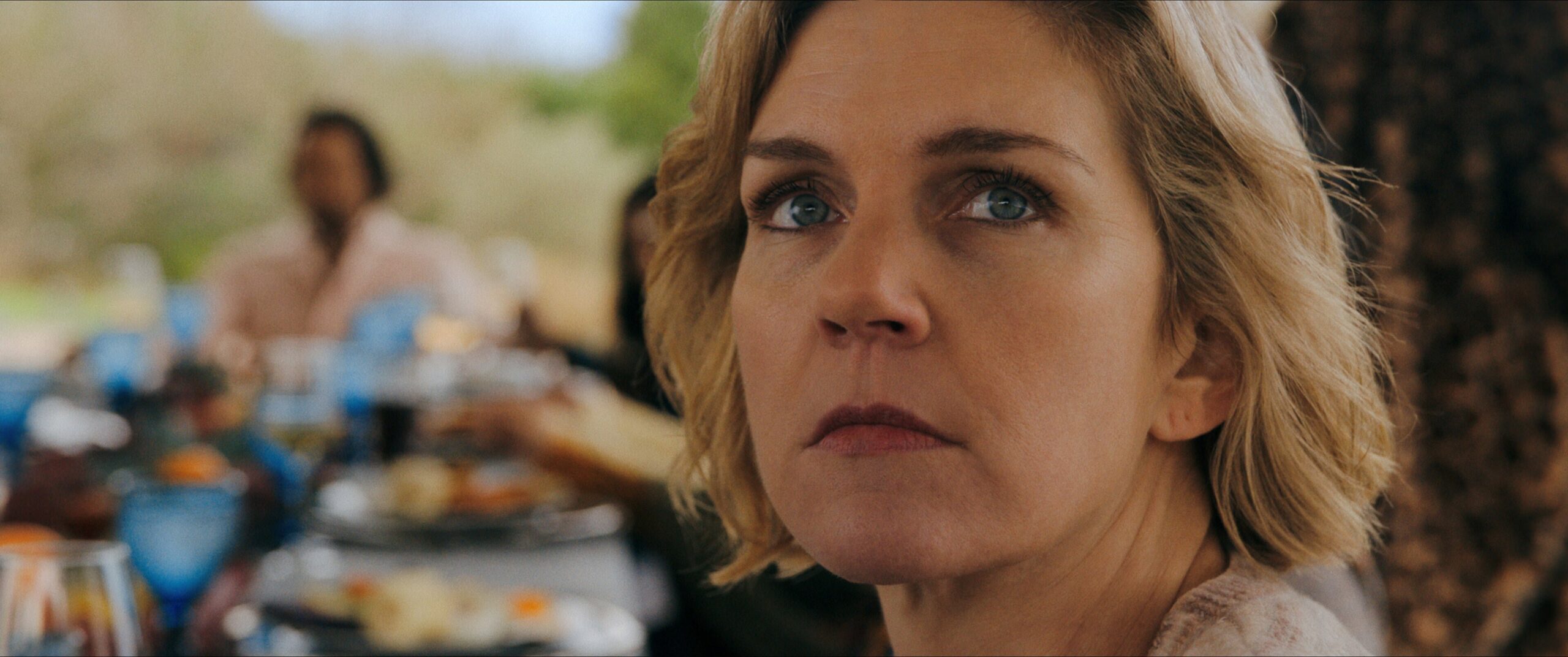
Rhea Seehorn is making waves in the entertainment industry with her standout performance in the Apple TV+ series, Pluribus. The show, created by Vince Gilligan, has captivated audiences and critics alike, earning Seehorn a Golden Globe earlier this month, following her recent win at the Critics’ Choice Awards. Her portrayal of Carol Sturka in this unsettling sci-fi narrative is not just a showcase of talent; it raises profound questions about identity and individualism in a rapidly changing world.
Set against the backdrop of an alien virus that engulfs the globe, Pluribus explores the concept of a collective consciousness, or hivemind, which absorbs nearly all of humanity, leaving just 13 immune individuals. These “lucky” survivors face an unprecedented reality that challenges their very essence. For Carol, the loss is particularly poignant as she grapples with the death of her wife, Helen, portrayed by Miriam Shor, during the initial outbreak known as the “turning event.”
While many immune individuals adapt to their new existence, Carol resists the hivemind’s embrace. Instead of punishing her for her defiance, the hivemind assigns her a companion, Zosia, played by Karolina Wydra. Zosia is designed to cater to Carol’s every need, reflecting the hive’s unsettling interpretation of kindness. With this peculiar relationship, the series delves into the blurred lines between care and control.
Exploring Themes of Control and Identity
The conversation around Pluribus has extended far beyond its visual spectacle and plot twists. Viewers are left questioning the underlying motives of the hivemind. On the surface, its goal appears altruistic: a promise of eternal happiness, complete harmony, and an end to human suffering. Yet, the unsettling reality is that most of the 13 survivors do not reject this new way of life. In fact, one even chooses to join the hivemind voluntarily.
The show’s narrative raises critical dilemmas: Do individuals sacrifice their unique identities for the allure of bliss? Is it preferable to live in comfort and security within the hive, or to reclaim the chaos of human existence with all its imperfections? These ethical quandaries linger long after the credits roll.
Seehorn’s performance and the show’s themes have sparked discussions about parallels to contemporary issues, particularly in the realm of artificial intelligence. Although Vince Gilligan clarified that the show was not intended as a direct commentary on AI, many viewers draw connections between the hivemind’s efficiency and the increasing prevalence of AI in daily life.
Reflections on Technology and Humanity
In interviews, Gilligan acknowledged that while the idea for Pluribus originated years ago, the current discourse surrounding AI has prompted a reevaluation of the show’s implications. “I wasn’t really thinking of AI because this was about eight or 10 years ago,” he noted. “Of course, the phrase ‘artificial intelligence’ certainly predated ChatGPT, but it wasn’t in the news like it is now.”
The show invites viewers to reflect on the convenience offered by technology and the potential costs associated with it. As AI becomes increasingly capable of enhancing our lives—perfecting our writing, speech, and even creating idealized images of ourselves—it raises the question: what do we trade for these advancements?
Gilligan’s narrative challenges audiences to consider whether a perfectly ordered existence is worth the loss of individuality and self. The underlying concern is not merely about technology itself but about the quiet compromises society might make in the name of progress.
As Pluribus continues to gain traction on Apple TV+, it serves as both a gripping sci-fi tale and a poignant commentary on the relationship between humanity and technology. The series holds a mirror to society, prompting viewers to contemplate who they might become in a world where everything is optimized for ease and efficiency, and whether they would recognize themselves in such a landscape.