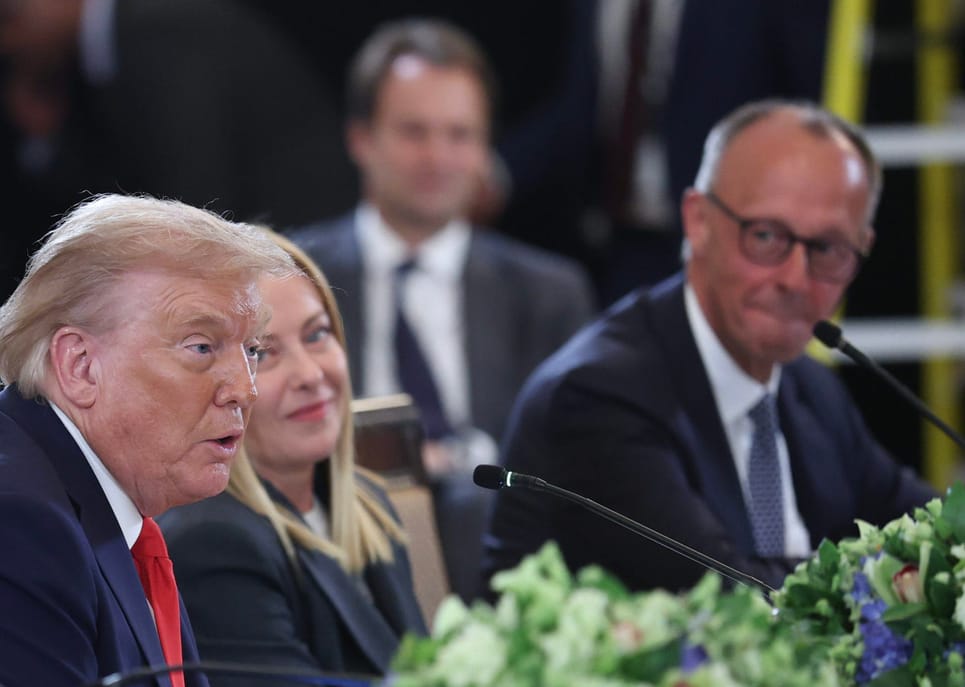
German Chancellor Friedrich Merz and Italian Prime Minister Giorgia Meloni announced on March 15, 2024, that they would not be able to join U.S. President Donald Trump’s proposed “Board of Peace.” This decision stems from constitutional constraints in their respective countries that hinder participation in the initiative. Their stance reflects a careful approach to maintaining diplomatic relations with the U.S. while navigating internal legal frameworks.
During a joint press conference held in Rome, both leaders expressed a willingness to support peace initiatives but highlighted significant issues with Trump’s Board of Peace, a key element of his strategy for post-conflict governance in Gaza. Meloni stated, “We are ready. But of course there are objective problems with the way the initiative is structured.” She indicated that Trump had been informed of these concerns, suggesting that further discussions could lead to potential solutions.
Meloni explained that her country’s constitution prohibits joining international bodies where one member holds greater power than others, which she argues applies to the structure of Trump’s proposal. Merz echoed her sentiments, emphasizing the importance of constitutional integrity within Germany. “I would personally be willing to join a peace board,” he remarked, but added that the governance structures presented in the initiative could not be accepted due to legal constraints.
In the broader European context, only Hungary and Bulgaria have expressed interest in joining Trump’s initiative, raising concerns among many EU nations regarding the inclusion of authoritarian regimes like Russia and Belarus. Merz and Meloni’s cautious approach seeks to strike a balance between supporting transatlantic cooperation and adhering to their constitutional commitments.
EU Leaders Discuss Strategies Amid Tensions
The remarks from Merz and Meloni come shortly after an emergency summit of EU leaders in Brussels, where discussions centered on the shifting post-World War II order and the challenges posed by Trump’s foreign policy. European leaders acknowledged the precarious state of international relations but differed significantly on how to engage with the U.S. administration.
While German officials previously welcomed Trump’s invitation, they remain cautious, underscoring the need for a united European response to the peace board proposal. They reiterated that the United Nations should remain the principal platform for conflict resolution.
As the diplomatic landscape continues to evolve, the positions of Merz and Meloni illustrate the complexities of international governance and the delicate balance European leaders must maintain when engaging with the U.S. administration. The ongoing dialogue reflects broader concerns over the implications of unilateral decisions in a multilateral world.