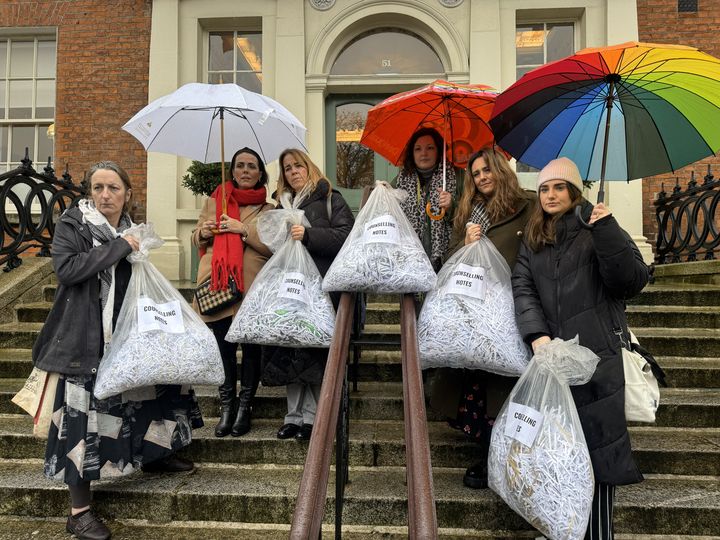
Survivors of sexual abuse, alongside therapists and advocates, protested in front of the Department of Justice on Thursday, expressing their discontent with proposed changes to the law regarding the use of counselling notes in sexual assault trials. The group presented bags filled with shredded counselling records as a symbolic gesture against what they described as a “patronising” approach to a sensitive issue.
The protest occurred just before the debate on the Criminal Law and Civil Law (Miscellaneous Provisions) Bill 2025 in the Dáil, Ireland’s parliament. An amendment to this bill aims to ensure that a disclosure hearing is mandatory before any counselling records can be introduced as evidence in sexual assault trials. Currently, complainants have the option to waive this right, a practice that has come under scrutiny for causing undue pressure on victims.
Speaking in the Dáil, Minister for Justice Jim O’Callaghan acknowledged that the existing system “has not operated as intended,” noting that many complainants feel coerced into agreeing to the waiver. The proposed amendment seeks to eliminate this waiver, mandating hearings in all cases involving the use of counselling records.
Survivor Paula Doyle, whose counselling notes were used in her rape trial, shared her traumatic experience during the protest. She revealed that the use of her notes left her feeling “contaminated and vile,” leading her to self-harm. Faced with the choice of handing over her records to the Director of Public Prosecutions or delaying her trial by “another six to nine months,” she reluctantly agreed to the disclosure.
“I was barely surviving at the time,” Doyle recalled. “I couldn’t see tomorrow, never mind six to nine months. So, I said, ‘Oh, it’s OK, take them,’ not knowing that they would actually be used in court.” She described the emotional toll of revisiting “three and a half, four years” of her records as distressing and difficult.
As the debate around the amendment unfolds, Bairbre Kelly, a therapist and campaigner, voiced her concerns about the inadequacy of the proposed changes. She criticized the amendment as “patronising,” arguing that it fails to provide adequate protection and respect for survivors under Irish law. Kelly emphasized the need for survivors to have the right to heal while also seeking justice.
Advocacy group Therapists Against Harm has launched a campaign encouraging therapists to pledge not to hand over counselling notes, a movement that is reportedly gaining momentum. Ruth Coppinger, a member of the People Before Profit-Solidarity party, supported this initiative, asserting that the amendment strips complainants of agency and introduces further trauma through additional hearings.
Coppinger highlighted that a similar legal framework enacted in Canada in 2020 resulted in a rise in requests for counselling notes from the defence, raising concerns about the implications for victims’ privacy and mental well-being. She asserted, “We want a complete ban; there shouldn’t be any fear on behalf of somebody that their notes will be accessed at all.”
In response to the protests and the debate, O’Callaghan noted that the advice from the Attorney General indicated that a complete ban on accessing counselling notes may not align with constitutional requirements. Nevertheless, he expressed commitment to limiting intrusions into victims’ privacy rights as much as possible. He mentioned ongoing discussions about expanding protections in legislation to cover other sensitive personal data, such as medical and child protection records.
As the legislative process continues, survivors, therapists, and advocates remain vigilant, advocating for changes that address their concerns and ultimately support the healing and dignity of individuals affected by sexual violence.