Research teams from University College Dublin, Maynooth University, and University of Glasgow have embarked on a groundbreaking study focusing on the behaviour of biofilms in the context of long-duration spaceflights. This research aims to understand how biofilms, which are complex communities of microorganisms, may impact human health during extended missions in space.
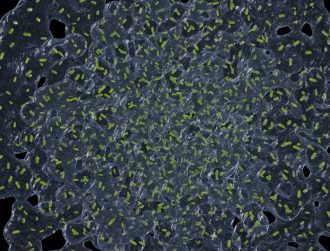
Biofilms can be likened to microbial “cities,” forming protective structures that help microorganisms survive in various environments. They are ubiquitous on Earth, playing critical roles in supporting both human and plant health. Yet, their responses to the unique stressors of space travel remain largely unexplored.
Dr. Katherine J. Baxter, the first author of the study and coordinator of the UK Space Life and Biomedical Sciences Association, emphasized the importance of this research. She stated, “Biofilms are often considered from an infection viewpoint and treated as a problem to eliminate, but in reality, they are the prevailing microbial lifestyle that supports healthy biological systems.”
Understanding biofilms is increasingly vital as space missions become more ambitious. The researchers noted that even simulations of space conditions on Earth can significantly alter biofilm functionalities, including their stress tolerance levels. These changes can vary widely across different microbial species, depending on the testing platform used.
Research Focus and Implications
The team operates within the GeneLab Microbes Analysis Working Group associated with the NASA Open Science Data Repository. They have outlined a comprehensive roadmap that employs advanced genetic and biochemical techniques to delve deeper into biofilm adaptability in space environments. Their findings have been published in the journal npj biofilms and microbiomes.
Dr. Eszter Sas, a co-author and metabolomics specialist at Maynooth University, highlighted the integral role of plants in long-duration space missions. “Plants will sit at the centre of long-duration spaceflight missions, and plant performance depends on biofilm interactions in and around plant root systems,” she explained.
By integrating multispecies genetics and biochemistry, modern multiomics approaches promise to unveil new mechanisms of biofilm behaviour in response to spaceflight. This research aims to bridge significant gaps in understanding the signalling and metabolic processes at the intersection of biofilms and plant roots.
Prof. Nicholas J.B. Brereton, the senior author and an assistant professor at the UCD School of Biology and Environmental Science, added another layer of insight. He noted that “the translation of value runs both ways.” Spaceflight conditions can reveal new biological processes under unfamiliar stress, providing insights not only relevant to life in space but also applicable to health and agricultural practices on Earth.
This collaborative effort signifies a crucial step in safeguarding human health during space missions and underscores the potential for biofilm research to inform advancements both in outer space and on our home planet. The findings emphasize a need for ongoing exploration into the microbial dynamics that could influence future space travel and the sustainability of life beyond Earth.