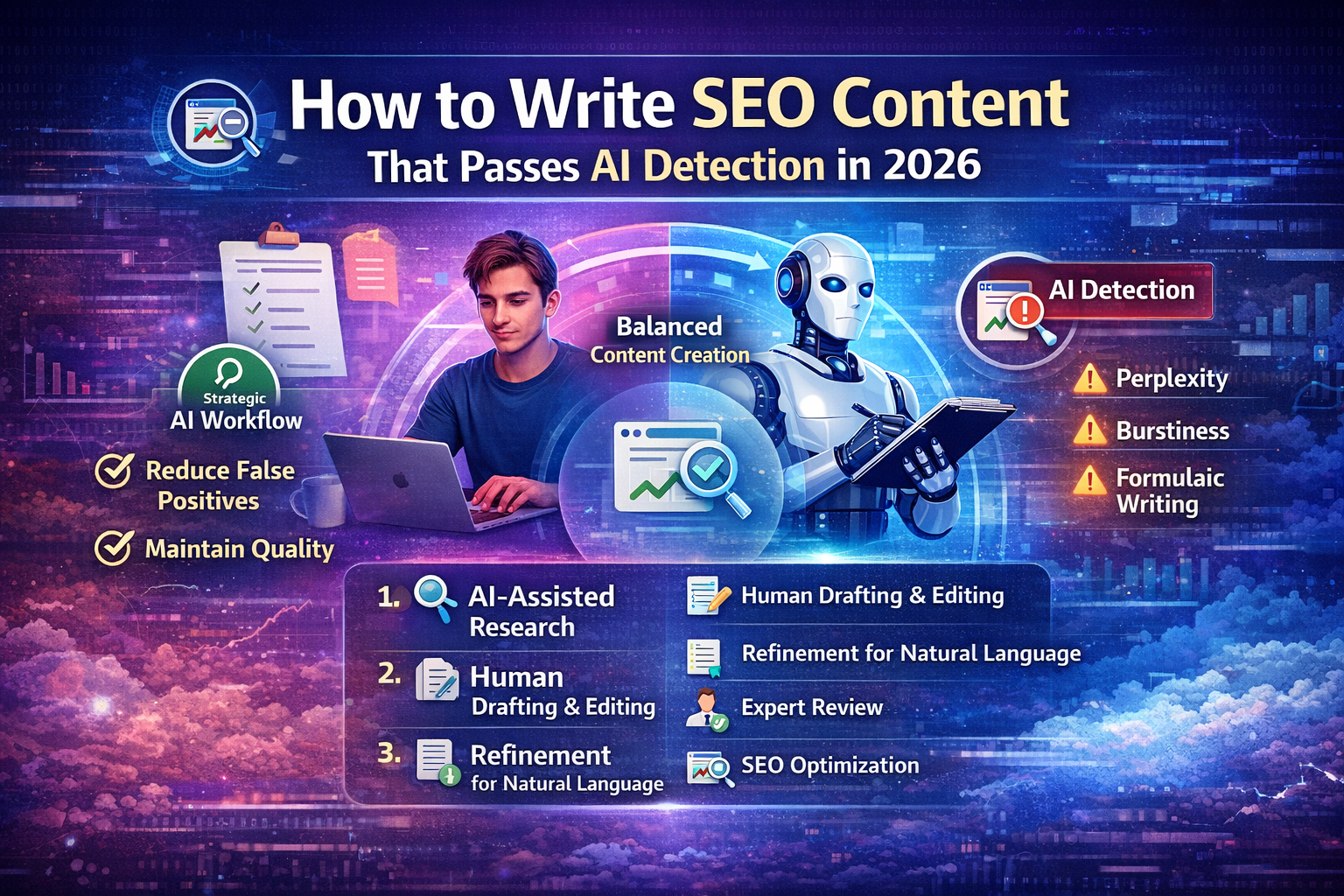
The introduction of AI detection systems in 2025 fundamentally changed the content marketing landscape. Businesses that relied on AI for blog posts and marketing materials now face the challenge of having their content flagged or rejected by search engines and publishers. In 2026, effective marketers are leveraging AI tools strategically to enhance content quality while minimizing false positives. This guide outlines a comprehensive workflow for producing AI-assisted content that not only ranks well but also converts effectively.
Understanding the Importance of AI Detection
AI detection has tangible implications for businesses, impacting their bottom lines directly. Following the March 2024 update from Google, which emphasizes evaluating content quality based on Experience, Expertise, Authoritativeness, and Trustworthiness (E-E-A-T), it is clear that simply using AI does not automatically lead to penalties. Nonetheless, many publishers are adopting AI detection tools, leading to a notable increase in content rejection rates for submissions that score high on AI probability.
When content is flagged, several issues arise:
– **Search Performance**: Content deemed low-quality may suffer in search rankings. Google’s algorithms increasingly associate certain linguistic patterns with inferior content.
– **Publisher Rejections**: Articles intended for guest posts may be turned away if editors suspect AI authorship, potentially harming relationships.
– **Brand Perception**: Clients that utilize detection tools may question the authenticity of content if AI usage is high.
– **Competitive Disadvantage**: Competitors employing more sophisticated workflows could capture rankings and traffic, leaving others at a disadvantage.
To navigate these challenges, businesses should focus on strategically integrating AI while ensuring that human elements that add value are preserved.
Optimizing Content Creation with AI Tools
Before crafting content that minimizes false positives, it is essential to understand what AI detection systems identify. Tools such as GPTZero, Originality.ai, and Copyleaks analyze various linguistic patterns, including:
– **Perplexity**: This measures text predictability, with AI content often following predictable patterns due to the statistical nature of language models.
– **Burstiness**: Human writers typically vary sentence lengths, creating a natural flow, whereas AI often generates uniform sentence structures.
– **N-gram Analysis**: This examines word sequence patterns, identifying combinations that frequently appear in AI training data.
Despite their utility, AI detectors are not infallible. A study from Stanford University found that these tools disproportionately flag non-native English speakers’ writing, resulting in higher false positive rates for certain groups, including those who heavily rely on grammar tools or produce technical content.
Businesses can create effective content by balancing efficiency with authenticity. Successful workflows involve:
1. **Research and Planning**: Utilize AI for keyword research, competitor analysis, and topic clustering. For instance, prompt the AI with, “Analyze top-ranking articles for [keyword]. Identify themes, angles, and gaps our article should address.”
2. **Writing Assistance**: Use AI to generate options for introductions, expand bullet points into detailed paragraphs, and suggest transitions. It is crucial to avoid using AI-generated content without significant revision. The objective is to enhance human writing with AI, not to replace it.
3. **Human Expertise**: Content must include elements only humans can provide, such as original data, specific industry examples, and personal insights. This expertise aligns with the E-E-A-T guidelines, which AI cannot replicate.
4. **Final Optimization**: Before publishing, ensure that your content adheres to SEO best practices, including keyword placement, internal and external links, and a well-crafted meta description.
To further enhance content quality, consider implementing advanced strategies. Alternating between human and AI-generated sections can yield better results. For example, write the introduction and conclusion personally while using AI to draft the body content. Furthermore, heavily edit AI contributions, rewriting a significant portion to ensure authenticity.
As detection technology continues to advance, businesses should remain proactive. Emerging trends such as watermarking and behavioral analysis are being explored to improve accuracy in detecting AI-generated content. Keeping abreast of these developments is crucial for maintaining a competitive edge.
In conclusion, successful content strategies in 2026 will recognize AI tools as valuable assistants that amplify human creativity and expertise. The focus should not be on circumventing detection systems, but rather on integrating AI in ways that enhance authenticity and value. By systematically applying the outlined workflow and rigorously measuring results, businesses can achieve lower detection scores while simultaneously improving rankings, engagement, and overall business performance.