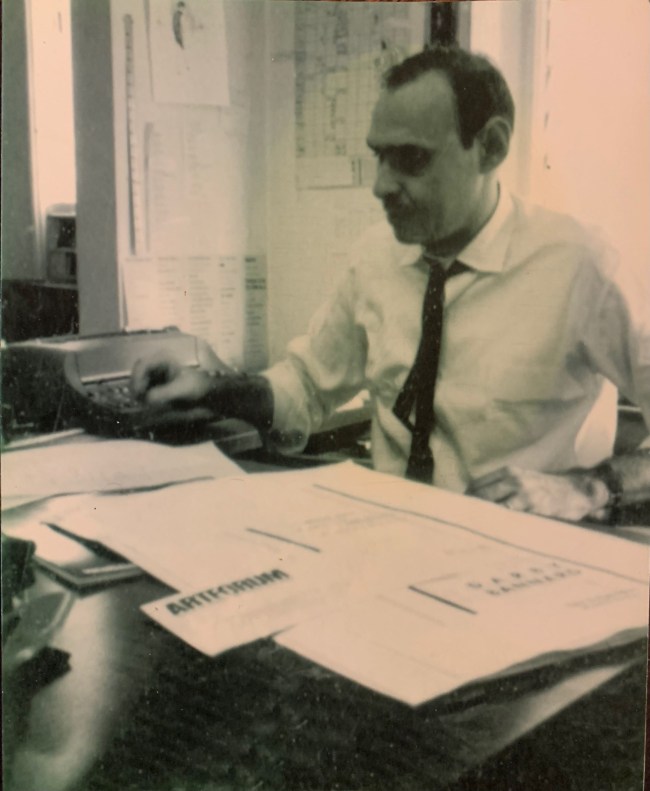
BREAKING: Philip Leider, the pioneering founding editor of Artforum, has died at his home in Berkeley, California, on January 11, 2024, at the age of 96. His passing was confirmed by his daughter, Polly Leider, marking the end of an era for one of the most influential figures in the art world.
Under Leider’s leadership, Artforum transformed into a leading voice in contemporary art since its inception in 1962. He emphasized a clear distinction between the art world and commercial interests, shaping the magazine’s ethos and positioning it as a critical platform for artists and critics alike. “More than any other voice or venue, Artforum substantiated the break in American culture in the late ’60s,” stated renowned artist Richard Serra in a 1993 tribute to Leider’s influence.
Born in New York City in 1929 to Jewish immigrant parents, Leider’s journey began with a BA in history from Brooklyn College and an MA in English Literature from the University of Nebraska. After a stint in the military and a brief law school experience, he moved his family to San Francisco. In 1962, he was hired as the first paid staff member of Artforum by founder John Irwin, on the recommendation of fellow editor John Coplans.
In the inaugural issue of Artforum, Leider articulated his vision, stating, “Art and artists will flourish when an admiring public buys paintings because they love them.” His commitment to artistic integrity helped cultivate a new generation of writers and critics, including Michael Fried, Max Kozloff, and Rosalind Krauss.
Despite the magazine’s rising fame, Leider remained grounded. He wanted “nothing to do with power or money,” emphasizing family over commercial success. His leadership coincided with critical shifts in the art landscape, as he championed emerging movements and artists, including Andy Warhol and Land art pioneers like Robert Smithson and Michael Heizer.
In 1971, at the peak of Artforum’s influence, Leider resigned, feeling disconnected from the evolving art scene. “There was a scene happening, unexpected, unpredictable and unpredicted,” he reflected in a 2000 interview. Following his departure, Leider transitioned to academia, teaching art history at the University of California, Irvine, and later at the Bezalel Academy of Fine Arts in Jerusalem.
He continued to contribute to significant art publications until his retirement in 1998. Survived by his wife Gladys, three children, seven grandchildren, and one great-grandchild, his legacy endures in the art community.
In response to his death, Michael Fried remarked, “Phil Leider was a charming, funny, brilliant man, and there would be no Artforum without him.” As the art world mourns, the impact of Leider’s vision and leadership remains a pivotal chapter in the history of contemporary art.
As we remember Philip Leider, the question arises: Who will carry forward his commitment to artistic integrity and critical discourse in an ever-changing cultural landscape? The art community is left to reflect on the void his departure creates and the legacy he leaves behind.