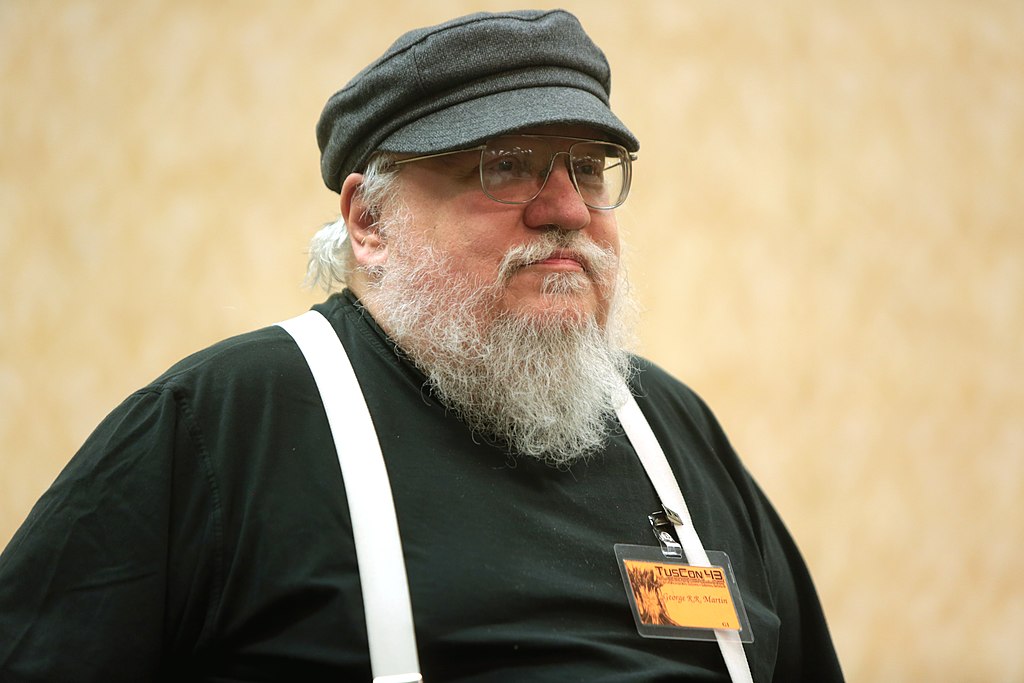
The literary community is abuzz following Brandon Sanderson‘s critique of George R.R. Martin‘s acclaimed fantasy series, A Song of Ice and Fire. Sanderson, renowned for his work on The Wheel of Time and the Mistborn series, recently expressed his discomfort with the brutal storytelling style that characterizes Martin’s writing. As fans eagerly await the sixth installment, The Winds of Winter, Sanderson’s insights offer a thought-provoking perspective on the genre’s narrative mechanics.
In a candid post on Reddit, Sanderson revealed that while he recognizes Martin’s talent, he found reading Game of Thrones to be emotionally overwhelming. He described the experience as “too much” for his nerves, highlighting that his critique extends beyond the graphic content. Sanderson questions the series’ realism, contrasting his own narrative style—known as the “architect” approach—with Martin’s more organic “gardener” method. He explained, “It didn’t feel realistic so much as, ‘Look how much I can build someone up before I destroy them.'” This perspective sheds light on the differing philosophies that shape their storytelling.
Sanderson’s Perspective on Emotional Manipulation
Sanderson acknowledges the skill involved in Martin’s use of tragic plot twists, describing it as an “absolute art” of emotional manipulation. Yet, he argues that such techniques are often employed because they would be too grim for a conventional fantasy narrative. As anticipation builds for The Winds of Winter, a lingering question remains: Will Martin continue to escalate the shock factor, or will he explore a more nuanced emotional landscape?
As of early 2026, Martin has reported progress on the manuscript, estimating it to be between 1,100 and 1,200 pages complete, which he previously noted in late 2022. He anticipates needing another 400 to 500 pages to finalize the story. Given the heightened expectations following past installments, the stakes for the next book are at an all-time high.
Martin’s Historical Inspirations
In response to Sanderson’s critiques, Martin emphasizes that labeling his work as “unrealistic” overlooks his commitment to historical authenticity. In an interview with Time magazine, Martin stated that his narratives blend the “magical appeal of fantasy” with the “realistic elements of historical fiction.” Drawing inspiration from actual historical events, such as the Wars of the Roses and the Glencoe Massacre, Martin’s storytelling seeks to challenge the boundaries of typical fantasy conventions.
By incorporating elements of the gritty Middle Ages, Martin strives to maintain a level of unpredictability in his work. He noted, “As much as I love historical fiction, my problem with historical fiction is that you always know what’s going to happen.” This approach keeps readers engaged, ensuring that suspense remains a driving factor throughout The Winds of Winter.
The philosophical divide between Sanderson and Martin also highlights why Sanderson would refrain from completing Martin’s work, should it become necessary. Sanderson views Martin’s storytelling as “fundamentally pessimistic,” preferring narratives that, despite their darkness, offer a “spark of hope.” In contrast, the television adaptation’s finale left many viewers with a sense of despair, suggesting that The Winds of Winter may follow a similarly somber trajectory.
Despite the challenges, Martin insists that abandoning the project would feel like a “total failure.” He acknowledges that the book is overdue and has recently criticized fans’ “rude” speculation regarding his health. As the literary world watches closely, the outcome of this creative struggle will undoubtedly shape the future of fantasy literature.