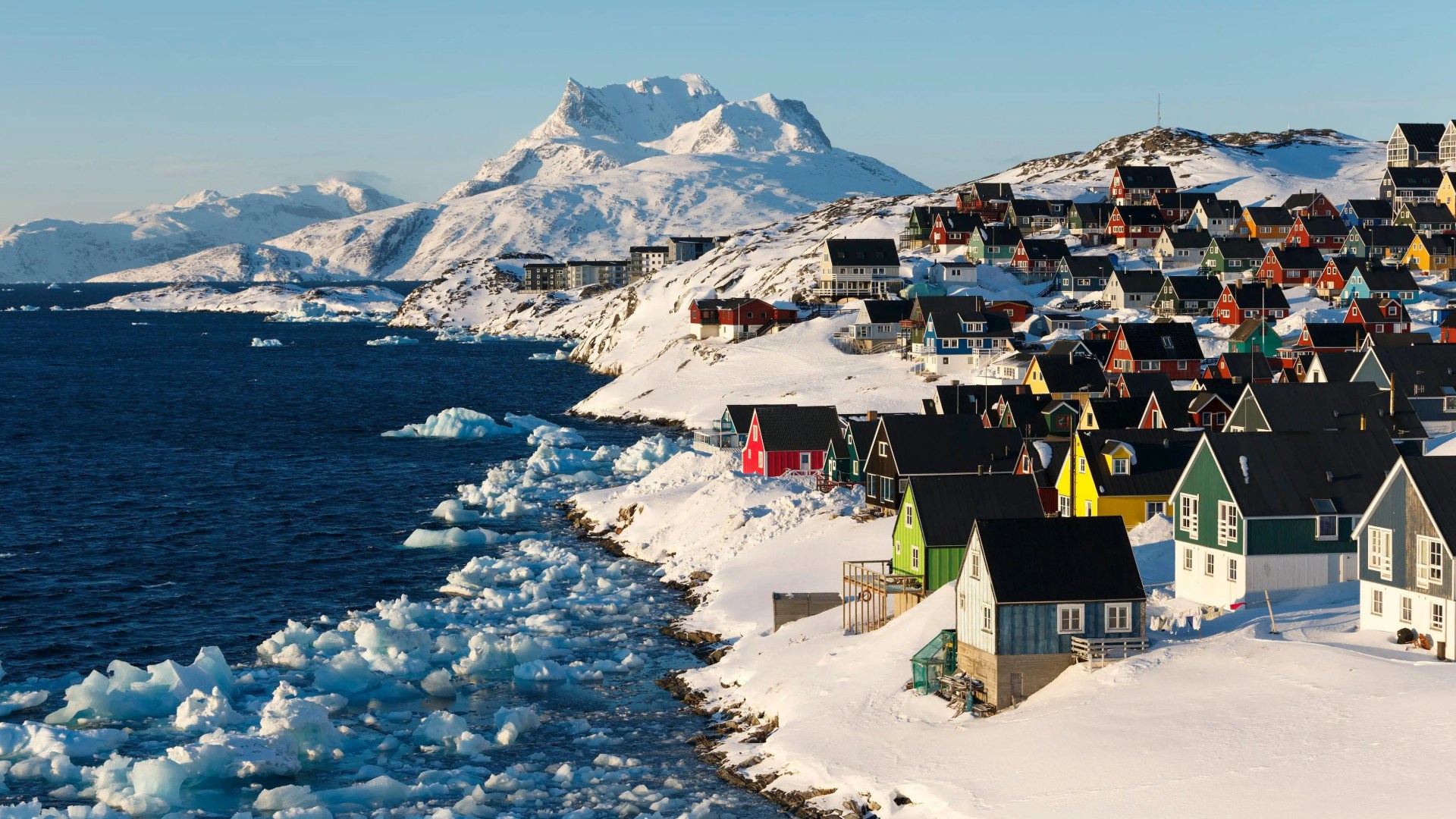
The possibility of the United States acquiring Greenland has intensified, with White House officials indicating that President Donald Trump could take action within weeks. This development has left Denmark feeling “betrayed” as tensions rise over the strategic Arctic territory.
According to Thomas Dans, the U.S. Arctic commissioner, Trump aims to expedite the process of annexing the island. In remarks to USA Today, Dans described the situation as a “train route with multiple stops,” suggesting that negotiations could swiftly bypass local concerns to reach a direct agreement. He emphasized the urgency, stating, “Things could move on an express basis.”
Warnings also emerged from Russia, with Dmitry Medvedev, a senior Kremlin official, suggesting that Greenlanders might soon have the opportunity to vote on potential Russian annexation. Medvedev advised Trump to act quickly, indicating that if the U.S. does not secure the island, Moscow could make a claim.
While Dans suggested that the U.S. could act rapidly from a transactional standpoint, he acknowledged that gaining the trust and support of the Greenlandic people would require significant time and effort. Recent polls indicate that the majority of Greenland’s approximately 57,000 residents prefer independence from Denmark but do not wish to become part of the United States.
The U.S. administration has reportedly discussed offering financial incentives of between $10,000 and $100,000 to encourage a move towards independence. However, both Greenland and Denmark maintain that the territory is not for sale. In response to the escalating rhetoric, Naaja Nathanielsen, Greenland’s minister for business and mineral resources, expressed concern, stating, “People are not sleeping, children are afraid, and it just fills everything these days.”
Danish Prime Minister Mette Frederiksen reinforced her country’s commitment to Arctic security, asserting that Denmark has no intention of becoming American. She described the current situation as offensive and bewildering. “We have worked towards more collaboration with the Americans for many years,” she added.
As diplomatic discussions unfold, Vice President JD Vance is set to meet with senior Danish and Greenlandic officials at the White House. This meeting follows Denmark’s request amid Trump’s insistence that acquiring Greenland is a “national security priority.” The island is rich in natural resources, including oil, gas, and vital minerals, making it a focal point for global strategic interests.
On a recent occasion, Trump expressed his desire to reach an agreement “the easy way,” but added, “if we don’t do it the easy way, we’re going to do it the hard way.” Greenland’s Prime Minister firmly responded that “we do not want to be Americans.”
The Danish government has cautioned against any form of military intervention. Rasmus Jarlov, chair of the Danish parliament’s defense committee, warned that any U.S. military action would be met with serious consequences. He stated, “An attack by the U.S. will mean war.” Jarlov emphasized that while Denmark would not initiate conflict with the U.S., any attempt to remove Danish troops or police from Greenland would escalate to war.
In light of these tensions, British officials have engaged with counterparts from Germany and France to discuss potential military preparations. A plan named “Arctic Sentry” is reportedly in development, which could involve the deployment of British soldiers to Greenland.
As discussions continue, the future of Greenland remains uncertain, with both diplomatic and military implications for the region. The situation reflects broader geopolitical dynamics as nations vie for influence in the Arctic, a region of increasing strategic importance.