More than 8,000 children in Greater Manchester are facing significant challenges in commuting to school, particularly those in temporary accommodation. The situation has drawn attention to the difficulties families endure as they navigate long journeys and financial constraints.
Tosin Balogun, a healthcare assistant, shared her family’s experience of commuting from Stretford to Harpurhey, a distance of just six miles that required over an hour by bus. Her family was forced out of their home in Gorton three years ago, leaving them reliant on public transport to reach Manchester Communication Academy. “We used to leave home at 6:30 a.m. to get to school for 8:15 a.m.,” Tosin recalled, emphasizing the stress of the commute. “Sometimes the bus would be full and we would have to wait for another one.”
The Balogun family’s challenges are not unique. Many families in similar situations are ineligible for free school transport due to government regulations. Children qualify for free transport only if they live more than two miles from school and if there are no suitable schools nearby. However, in Greater Manchester, finding a school more than three miles away is nearly impossible.
As a result, parents face a daunting decision: pay for bus fares or move their children to different schools. Tosin chose to continue paying for transport, which can cost families upwards of £40 per month for bus passes. The Manchester Evening News has advocated for a free bus pass for children living in temporary accommodation who are more than 30 minutes’ walk from school. This campaign has garnered support from eight Greater Manchester MPs, including six from the mayor’s Labour Party, as well as various charities and local residents.
In response to the growing crisis, Manchester Communication Academy has begun covering some bus fares for homeless students after learning about the Baloguns’ struggles. The school utilizes a £10,000 grant from the Greater Manchester Mayor’s Charity for bus tickets, staff training, and support packages for families facing homelessness.
On December 3, 2023, Mayor Andy Burnham expressed sympathy for families like the Baloguns. While he acknowledged the challenges, he did not commit to introducing free bus passes. “What might open the door is we are moving to a more interventionist space as a combined authority,” he stated. Discussions about budget priorities are ongoing, with a resolution anticipated in January.
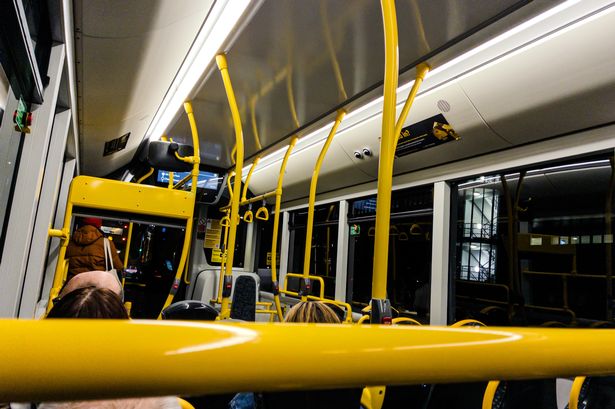
The daily commute for families like the Baloguns begins before dawn, navigating the cold streets of Stretford. The 255 and 263 bus routes service the area, but delays and overcrowding add to the stress. After reaching Piccadilly Gardens, students must transfer to another bus before arriving at school. With classes starting at 8:25 a.m., timely arrivals are crucial, particularly for access to free breakfast services.
Despite the efforts of the school and local authorities, the impact of these long, often chaotic commutes weighs heavily on students. The anxiety of making it to school on time, coupled with the need for breakfast, can be overwhelming. “When pupils arrive at Manchester Communication Academy, they see several signs outlining what the school trust’s values are, including ‘grit’,” Tosin noted. This journey certainly tests the resilience of these young individuals.
The financial burden of commuting is a pressing concern for many families. If Tosin were to repeat the commute today, she would face daily costs that could amount to £5.33, based on current bus fares. While recent changes to ticketing systems have simplified transport, the fundamental challenge remains: families are still expected to pay for school access.
The Manchester Evening News continues to advocate for change, urging Mayor Burnham to take action that would make a meaningful difference for families this holiday season. The call for a free bus pass for children in temporary accommodation reflects a broader commitment to support vulnerable families in Greater Manchester.