Scheduled flights to Antarctica are rare, with only a few airlines venturing to the icy continent. Currently, the most notable service is provided by Qantas, which operates sightseeing flights that soar over the Southern landmass. However, there are no regular itineraries that land on the continent. The primary reasons for this scarcity are the harsh environmental conditions, stringent regulatory requirements, and a lack of sufficient demand for flights.
Most of the human presence in Antarctica is limited to temporary research stations, which do not have the infrastructure to support regular commercial operations. Although a select number of tourists do visit, charter flights remain the most practical option for travel to this remote destination.
Recent Commercial Flights to Antarctica
The most recent instance of a commercial aircraft landing on Antarctica occurred on December 1, 2025, when Hi Fly successfully landed an Airbus A330-300 at Wolf’s Fang Runway. This flight was part of a seasonal luxury tour organized by White Desert and marked a significant milestone as it was the first time an Airbus A330 had touched down on the continent. Earlier in the same season, on November 2, 2025, Hi Fly also operated an A340-300 service to the same runway.
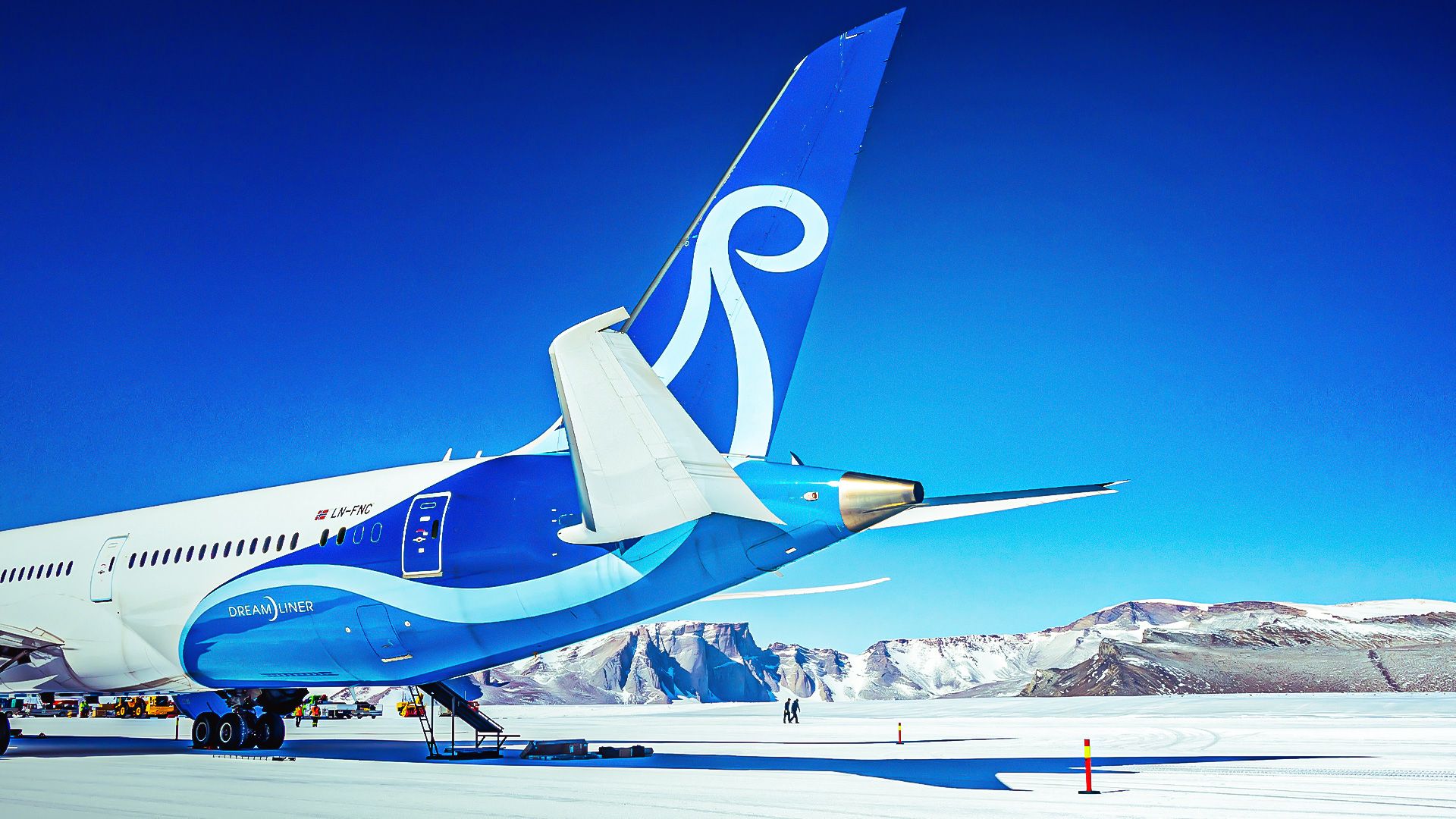
In 2024, two notable flights landed in Antarctica. Norse Atlantic Airways flew a Boeing 787-9 Dreamliner, named “Everglades,” to Troll Airfield in support of the Norwegian Polar Institute. Additionally, Smartwings made a single-aisle 737 MAX 8 flight to the Troll Research Station. Both airlines play a vital role in providing chartered air transport for research activities in Antarctica.
The Complexity of Antarctic Flights
Flights to Antarctica are significantly less common than those over the Arctic, where routes routinely connect major population centers. The nature of flights from the southernmost cities typically does not require overflying Antarctica, as they primarily travel north and south. The vast and desolate landscape of Antarctica lacks diversion airports, which complicates flight operations.
Extended-range Twin-engine Operational Performance Standards (ETOPS) requirements are stringent due to the absence of backup airports. Consequently, only high-performance aircraft can meet these criteria, which are costly to operate and require full passenger loads for profitability.
Antarctica does have a few established airfields, including Teniente R. Marsh Martin Airport on King George Island, which is one of the few with a gravel runway suitable for wheeled aircraft. Another significant location is Wolf’s Fang Runway in Queen Maud Land, operational only during the summer season from November to February. This runway is specially prepared to facilitate landings of intercontinental-class airplanes.
Gateway Cities and Operations
Most flights to Antarctica originate from a handful of gateway cities. Punta Arenas in Chile serves as the most popular departure point, particularly for flights into the interior of the continent. Christchurch in New Zealand is crucial for the US Antarctic Program’s “Operation Deep Freeze,” which regularly deploys military aircraft to McMurdo Station, the largest research base on the continent.
Australia’s government-funded operations often take off from Hobart, while the Dronning Maud Land Air Network (DROMLAN) serves a consortium of eleven nations, primarily operating from Cape Town, South Africa. These flights frequently land at Troll Airfield and are also utilized by luxury tourist services.
In terms of aircraft, the Antarctic fleet is diverse, including everything from small ski-equipped turboprops to military cargo jets. Among the notable aircraft are the Basler BT-67, a modified Douglas DC-3, and the De Havilland Canada DHC-6 Twin Otter, known for its short takeoff and landing capabilities.
The combination of extreme weather conditions and limited infrastructure creates significant challenges for air travel to Antarctica. Government-operated airfields, established primarily for research purposes, include several others like Wilkins Aerodrome and the recently established Phoenix Airfield.
In summary, while opportunities for commercial flights to Antarctica exist, they remain limited due to a variety of operational challenges. The unique landscape and environmental conditions pose significant hurdles, making air travel to the continent a rare and remarkable endeavor.