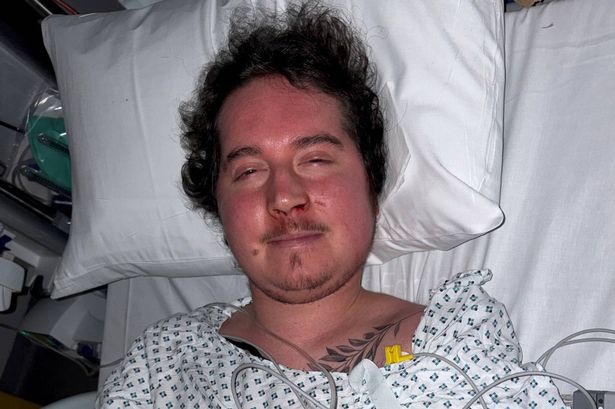
A young man’s struggle with exhaustion and confusion culminated in a shocking diagnosis of a pituitary tumour. Ollie Cook, 23, initially attributed his symptoms to the pressures of studying law at the University of Manchester. However, after a series of misdiagnoses and a dramatic health crisis, he learned the true cause of his distress.
Ollie began experiencing severe tiredness, mental fog, and muscle wasting during his final year of university. Despite his symptoms, he dismissed them as typical stress related to his academic commitments. Following a four-month solo trip across South East Asia, his health continued to decline. Medical professionals struggled to identify an underlying cause, prescribing only physiotherapy exercises.
By June 2025, Ollie’s condition had worsened significantly. He suffered a collapse at home due to an aneurysm, prompting his emergency transport to Lincoln Hospital. It was here that doctors discovered the pituitary tumour, a growth that develops in the gland located at the base of the brain.
In an operation at Sheffield Hospital, surgeons successfully removed the tumour along with half of Ollie’s pituitary gland. Following the procedure, he now requires regular MRI scans every six months to monitor for any potential recurrence.
Reflecting on his ordeal, Ollie shared, “Doctors estimate that the tumour had been growing for a year and a half, which correlated with when my symptoms started. I was suffering from fatigue, constant headaches, and difficulty concentrating.” He added that the pressures of university life blinded him to the severity of his condition.
In December 2023, after returning from his travels, Ollie visited his general practitioner. Although he sensed something was wrong, the doctor could not pinpoint any specific issues, leading to a prescription of physiotherapy. “I had convinced myself that I was fine,” he explained. “My pride became self-destructive and made me hesitant to seek further help.”
By February 2025, Ollie embarked on a three-month law internship in Kenya. Despite the excitement of his travels, his health continued to decline, with muscle pain intensifying. “I was making amazing memories, but I felt myself becoming more ill,” he recalled.
Upon returning to the UK, Ollie’s condition deteriorated rapidly. The adrenaline from his travels faded, revealing the underlying physical and mental distress he had been masking. “When I came back in June 2025, I was in a bad place,” he said.
After his aneurysm and subsequent diagnosis, Ollie expressed a mix of confusion and relief. “I told my parents I didn’t care if I was given the worst news—I just wanted answers. I was somewhat relieved when they told me that I had a tumour; finally, we knew what was causing me pain for so long.”
Ollie’s journey highlights the challenges patients face when symptoms are vague and misdiagnoses occur. “The problem was that my symptoms were so broad; I seemed to be a medical mystery,” he said. This uncertainty contributed significantly to his anxiety and depression, as he struggled with the frustration of not knowing why he was deteriorating.
Shannon Winslade, head of services at The Brain Tumour Charity, emphasized the importance of sharing personal experiences to raise awareness. “Every family deals with a diagnosis and its aftermath in their own unique way,” she stated. “That’s why The Brain Tumour Charity offers support to anyone who needs it; it’s crucial for them to know they are not alone.”
Ollie’s story serves as a reminder of the need for vigilance in health matters and the importance of seeking multiple opinions when faced with persistent and unexplained symptoms. His experience sheds light on the often-overlooked complexities of diagnosing conditions like pituitary tumours, encouraging others to advocate for their health.