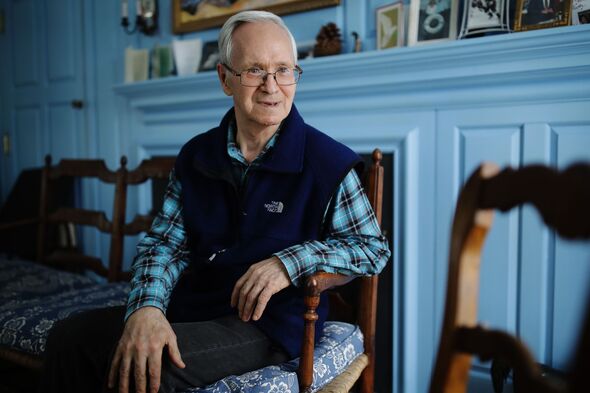
Dr. Vil Mirzayanov, a key figure in the development of the nerve agent known as Novichok, has raised alarms about the ongoing chemical weapons programs in Russia under President Vladimir Putin. Mirzayanov, who is now 90 years old, was part of a team at the Gosniiokht institute in Moscow during the 1970s, where they engineered Novichok to be more lethal than previous agents.
Mirzayanov’s concerns stem from his belief that Russia continues to advance its chemical weapons capabilities. He indicated that the Kremlin is “still developing” new varieties that could be even harder to detect and counteract. His initial involvement in the Novichok project was marked by a commitment to transform the nerve agent into a usable weapon, a task he led in the lab.
In the 1990s, Mirzayanov made the significant decision to expose the existence of Novichok, fully aware of the dangers it posed to his life. During the turbulent final months of the Soviet Union, he disclosed details about his research to a Russian newspaper, fearing that he would face imprisonment. Fortunately for him, the collapse of the Soviet Union rendered the legislation under which he could have been prosecuted ineffective.
Despite the risks, Mirzayanov’s revelations were pivotal. In 2008, he published a book detailing Novichok, including chemical formulas, which led to a shocking development just days later. On March 4, 2018, former Russian military officer Sergei Skripal and his daughter Yulia Skripal were poisoned with Novichok in Salisbury, Wiltshire. The incident prompted then-Prime Minister Theresa May to confirm that the nerve agent was part of a group of substances known as Novichok.
Mirzayanov expressed his shock upon hearing the name of the agent he had worked on. He never envisioned that Novichok would be employed as a tool for assassination. Although Russia denied involvement in the attack, a subsequent inquiry suggested that Putin likely authorized the attempt on Skripal’s life. The inquiry also criticized the decision not to provide Skripal with a new identity after his relocation to the UK.
Reflecting on the attack, Mirzayanov speculated that the operatives who applied Novichok to the Skripals’ door handles acted hastily, resulting in a less-than-lethal application. He also expressed skepticism regarding the poisoning of Russian opposition leader Alexei Navalny in 2020. Mirzayanov suggested that a different agent was used, indicating a calculated effort by Russian authorities to avoid drawing attention to their chemical weapon violations.
Mirzayanov’s fears extend beyond past incidents. He believes that the Putin administration is actively developing new chemical agents that would bypass international regulations. His work at Foliant, a secret program, was aimed at finding ways around global bans on chemical weapons. He stated, “Those chemical weapons are only weapons of mass destruction against civilians, innocent people.”
Given his experiences, Mirzayanov has urged US President Donald Trump to approach potential peace negotiations regarding Ukraine with caution. He cautioned that in any agreement, Russia would likely create loopholes to evade compliance, emphasizing the importance of vigilance in discussions surrounding arms control and international security.