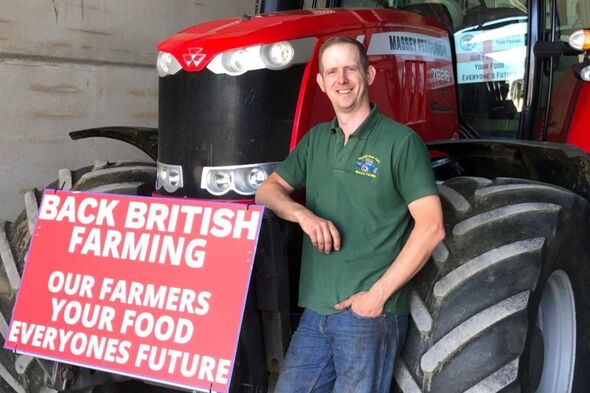
UPDATE: Farmers across the UK are expressing urgent concerns following Labour’s recent U-turn on inheritance tax plans. Philip Weston, a 40-year-old farmer from Northamptonshire, warns that the government’s climbdown will only provide “short-term” relief and fails to address critical issues undermining the agricultural sector.
The new policy, set to take effect in April, raises the threshold for full relief on qualifying agricultural assets to £2.5 million. Couples can now pass on up to £5 million without incurring inheritance tax. However, Weston argues this change merely delays the inevitable financial challenges, as land values continue to rise and operational costs soar.
“Any concession is better than nothing, but inheritance tax will still affect lots of family farms, especially in the longer term,” Weston stated in an interview with the Daily Express. His family has owned Hartwell Park Farm since 1820, and he fears the changes are a mere “smokescreen” designed to give the appearance of government support without addressing the underlying issues.
Data shows the number of farms facing inheritance tax has dropped from around 2,000 to approximately 1,100, but the impact remains significant. With the government’s shift, farmers like Weston are left uncertain about the future of their businesses. He has already invested millions in legal advice regarding inheritance tax and faces an estimated tax bill of £200,000 after his mother’s passing.
Weston emphasized that while the new threshold may seem beneficial, it does not tackle the core problems of low produce payments and high costs that plague the industry. “Farming is a business that absolutely relies on long-term planning, but everything Keir Starmer does seems reactionary,” he lamented.
The recent changes follow a long-awaited review into farm profitability, suggesting a “new deal” for farmers. Former NFU President Baroness Minette Batters highlighted the imposition of inheritance tax as the biggest concern among farmers regarding their viability. The NFU President, Tom Bradshaw, called the amendment a “huge relief” for many, yet experts warn it should not be seen as an “all-clear” for the sector.
Clive Pinton, head of wills, trusts, and tax at Aaron and Partners, cautioned that many farming estates could still fall within the tax’s purview due to rising land values. “It is vital that farmers seek early specialist legal advice,” he noted, emphasizing the need for thorough asset reviews to avoid unexpected tax liabilities.
The announcement has provoked mixed reactions, with Conservative leader Kemi Badenoch asserting the “fight isn’t finished,” and Liberal Democrat spokesperson Tim Farron demanding a complete repeal of the “unfair tax.”
Environment secretary Emma Reynolds stated, “Farmers are at the heart of our food security and environmental stewardship,” assuring that the government is committed to securing a profitable future for British farming.
Weston remains determined to fight against what he perceives as a lack of genuine support for farmers. He shared an emotional plea about the legacy of his family farm and the challenges ahead. “Once family farms are gone, they’re gone,” he warned. “If I can’t make a farm that’s been here since 1820 work, how will new farmers survive?”
As the agriculture sector faces intense pressures, the implications of Labour’s inheritance tax U-turn are expected to resonate deeply within rural communities. Farmers like Weston are calling for continued vigilance and advocacy to ensure the future of family-owned farms in the UK.