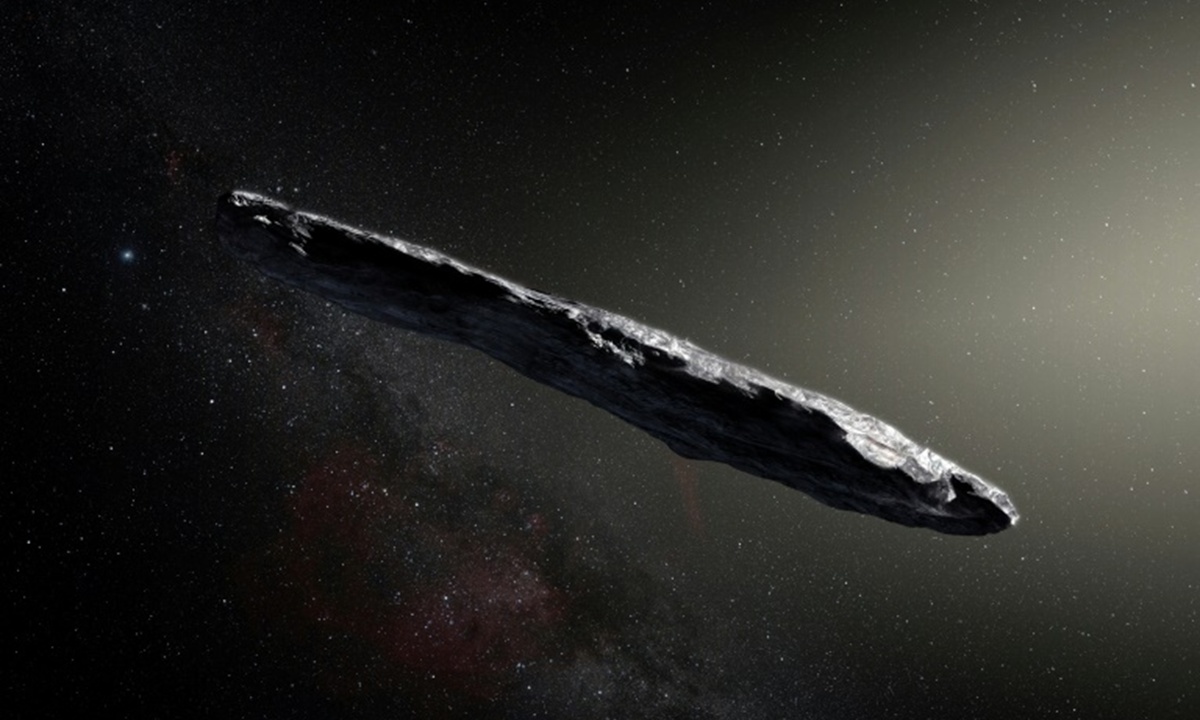
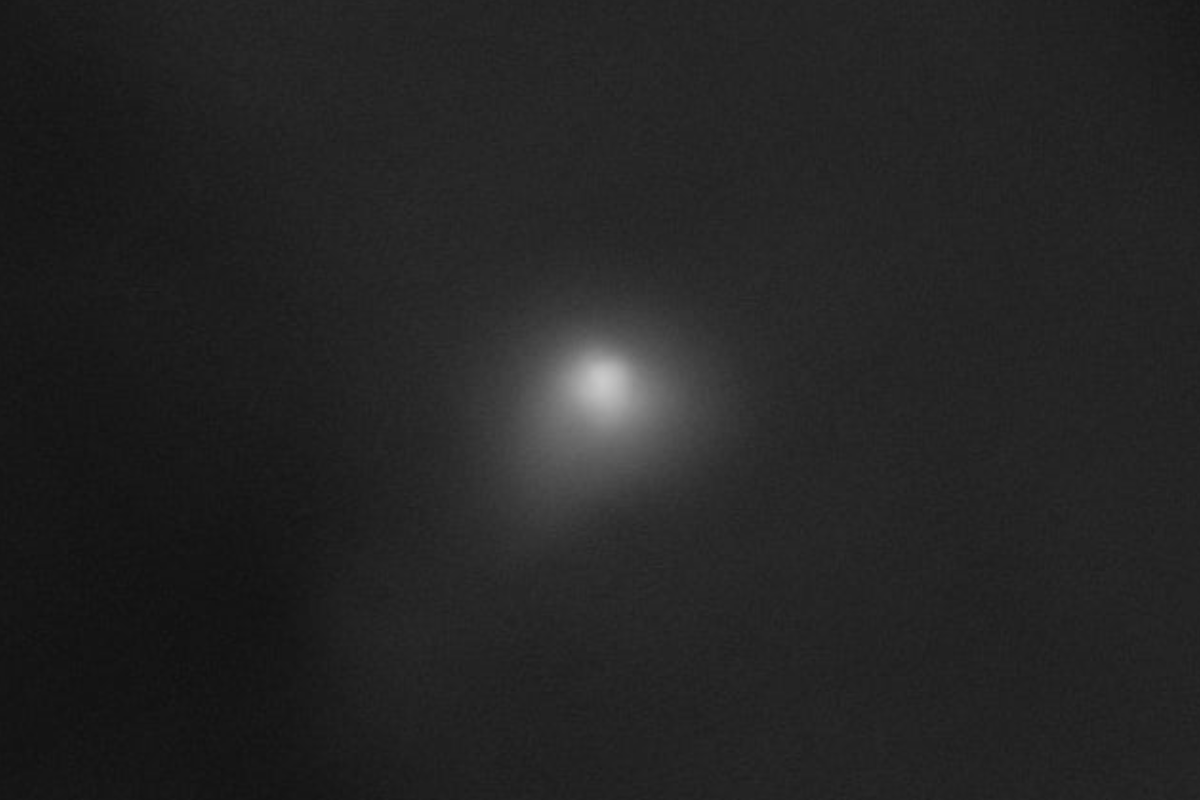
Recent observations of the interstellar comet 3I/ATLAS have ignited a vigorous debate in the scientific community regarding its origins. On December 19, 2023, this celestial body made its closest approach to Earth, passing at a distance of approximately 270 million kilometres (168 million miles) and travelling at a remarkable speed of 153,000 mph. While many astronomers categorize this object as a natural comet, Harvard physicist Avi Loeb has raised concerns that it could be an artificial probe, citing unusual chemical signatures as evidence.
As 3I/ATLAS continues its one-time flyby through our solar system, the discussion surrounding its nature has intensified. Loeb, known for his controversial views on extraterrestrial life, claims that the object’s coma—the cloud of gas and dust surrounding its nucleus—exhibits peculiarities that warrant further investigation. Specifically, he has pointed to the presence of nickel and iron atoms, which he argues should not vaporize under the cold conditions found at the distances where comets are typically observed.
In a blog post published earlier in October, Loeb stated, “At the distances at which comets are observed, the temperature is far too low to vaporise silicate, sulphide, and metallic grains that contain nickel and iron atoms.” His dramatic analogy to a “blind date” illustrates his concerns: “You never know whether you have a friendly visitor as your dating partner or a serial killer.”
NASA Responds to Extraterrestrial Claims
Despite the captivating nature of Loeb’s assertions, NASA has firmly defended the view that 3I/ATLAS is a natural comet. The agency has stated that there is “overwhelming evidence” supporting this conclusion. Tom Statler, a lead scientist at NASA, noted that the object’s characteristics align closely with those of known comets. “It looks like a comet. It does commit things. It very, very strongly resembles, in just about every way, the comets that we know,” he explained.
Statler acknowledged that while 3I/ATLAS may display some atypical features, these do not necessitate an artificial origin. He emphasized, “The evidence is overwhelmingly pointing to this object being a natural body. It’s a comet.”
The Future of 3I/ATLAS
As the debate continues, 3I/ATLAS is moving beyond its close encounter with Earth. Current trajectory models indicate that it will pass by Jupiter in early 2026 before continuing its journey through the outer reaches of the solar system. By 2028, the comet is expected to clear the orbital distances of Saturn, Uranus, and Neptune, ultimately entering a hyperbolic escape trajectory.
After completing its flyby, 3I/ATLAS will gradually recede into the interstellar medium, becoming increasingly difficult to detect with current instruments. Regardless of its classification as either a natural or artificial object, the interest surrounding 3I/ATLAS underscores humanity’s enduring fascination with the cosmos and the ongoing search for understanding our place within it.