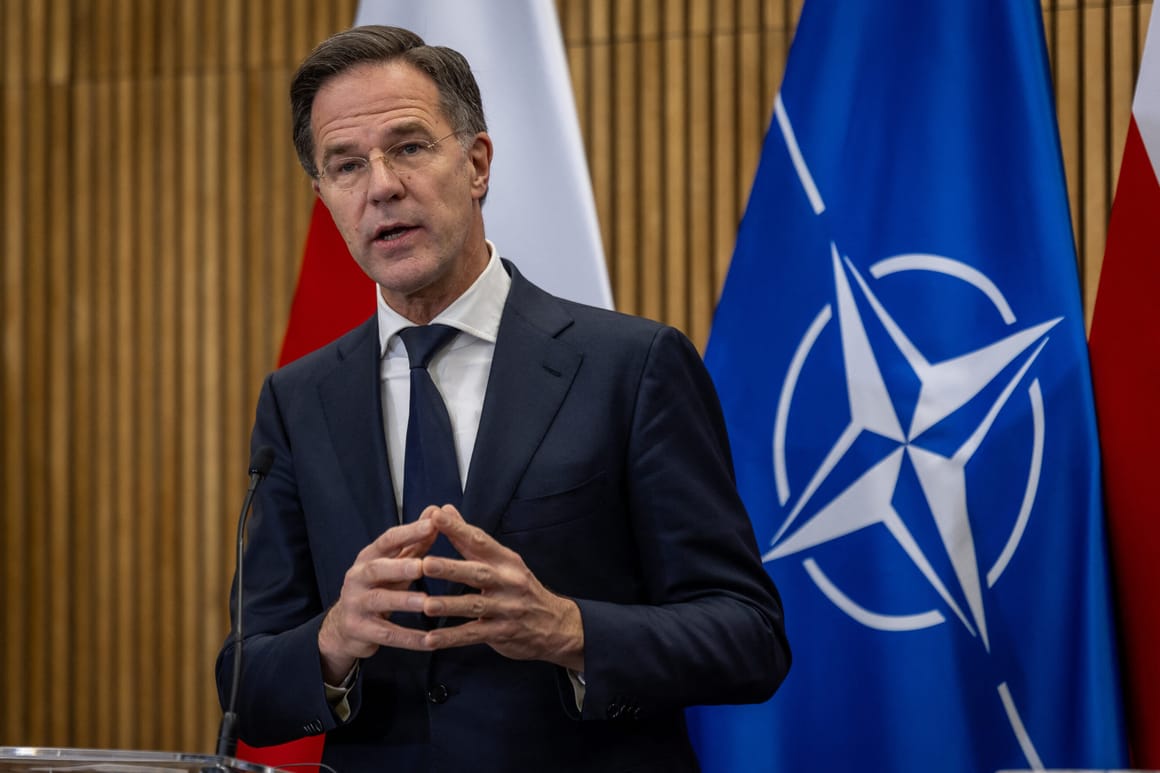
NATO Secretary-General Mark Rutte has firmly rejected calls for the European Union to pursue military independence from the United States. Speaking to the German Press Agency (dpa) on Friday, Rutte emphasized that the U.S. remains a reliable security partner amid rising skepticism within the EU about Washington’s commitment to European defense.
“I am absolutely convinced that the United States stands fully behind NATO. There is no doubt about that,” Rutte stated, reinforcing the alliance’s transatlantic framework. He acknowledged that Europe must increase its defense spending and take greater responsibility for its own security but stressed that this effort should occur in collaboration with the United States, rather than in isolation.
The remarks by Rutte come as a direct response to comments made by Manfred Weber, leader of the European People’s Party. In an interview with Funke Media Group, Weber raised concerns about Europe’s reliance on the U.S. given the political uncertainty surrounding American leadership. “We cannot seriously expect Trump to secure a peace solution on his own with American GIs,” Weber remarked, advocating for European military forces to operate under a European flag in future security arrangements, particularly in relation to Ukraine.
Strategic Autonomy and Defense Spending
The dialogue between Rutte and Weber reflects a larger debate within Europe regarding strategic autonomy. As the EU prepares for a more unpredictable geopolitical landscape, many leaders are advocating for increased defense capabilities. There is a consensus that Europe needs to enhance its military strength, yet Rutte cautioned against framing this development as a decoupling from NATO. He pointed out that the majority of the alliance’s military and economic power is still concentrated outside the EU, primarily in the United States, making transatlantic cooperation essential for European security.
Rutte’s comments highlight the delicate balance Europe must strike between bolstering its defenses and maintaining a strong partnership with the U.S. As NATO faces evolving security challenges, the alliance’s unity and collaborative efforts will be critical in addressing these issues effectively.
In conclusion, while the call for greater European military autonomy grows louder, Rutte’s statements serve as a reminder of the importance of the transatlantic relationship. The United States’ military engagement in Europe remains vital to the security of both NATO and EU member states, ensuring that the alliance can effectively respond to future threats.