Archaeologists have made a remarkable discovery in Carmona, a historic town in Andalusia, unveiling what is believed to be the world’s oldest wine, dating back approximately 2,000 years. This historic find occurred in 2019 when renovations led to the unearthing of an ancient urn containing a mysterious liquid, along with cremated human remains and a gold ring.
The urn, found in an undiscovered section of Carmona’s necropolis, was initially believed to date from the fourth century. However, experts from the University of Córdoba revised their estimates, now confirming the wine’s origin as the first century CE. This adjustment positions the liquid as potentially the oldest vintage in existence. The wine retains a reddish hue, although analysis revealed it began life as a white wine.
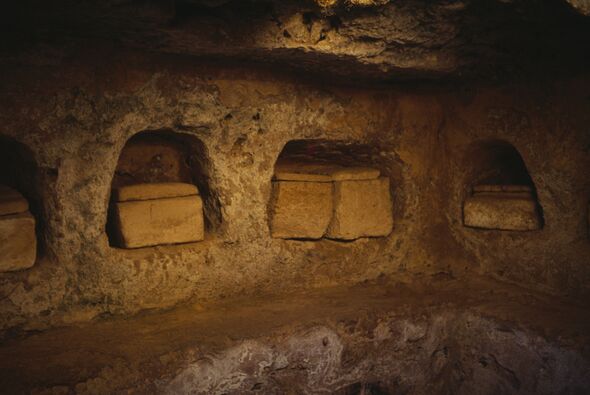
Inside the urn, archaeologists discovered the cremated remains of a man, whose ashes were submerged in the ancient liquid alongside a golden ring. The urn was encased in a lead container, which helped preserve its contents over the centuries. The necropolis itself is a vast mausoleum beneath the city, emphasizing the importance of burial practices in ancient Rome.
“It’s a sunken tomb that was excavated from the rock, which allowed it to remain standing for 2,000 years,” explained José Rafael Ruiz Arrebola, an organic chemist at the university. He further elaborated on Roman burial customs, noting that “Romans were proud, even in death, and used to build funeral monuments, such as towers, over their tombs so people could see them. They wanted to remain in people’s memories.”
Insights into Roman Customs and Wealth
The items discovered in the tomb likely formed part of a funerary “trousseau,” an assortment of personal belongings intended to accompany the deceased into the afterlife. In ancient Roman culture, death was viewed as a transition to another realm, necessitating that relatives prepare the deceased appropriately for this journey. This particular tomb is believed to have belonged to a wealthy family, conveniently located next to what was once a major thoroughfare connecting Carmona to Seville, known as Hispalis during Roman times.
Researchers have noted that the urn’s findings provide important insights into social customs. In ancient Rome, wine was predominantly considered a “man’s drink,” and women were prohibited from consuming it. The presence of wine in the burial indicates that gender divisions extended even into the afterlife, reflecting societal norms of the era.
The wine found in the urn narrowly surpasses the Speyer Wine Bottle for the title of the world’s oldest wine. The Speyer bottle, another Roman vintage, dates back to 325 CE and was discovered in a tomb near Speyer, Germany.
This discovery in Carmona not only sheds light on ancient practices but also contributes significantly to our understanding of Roman culture and its burial rituals. The findings illuminate how the Romans honored their deceased, ensuring that their memories would endure through the ages.