
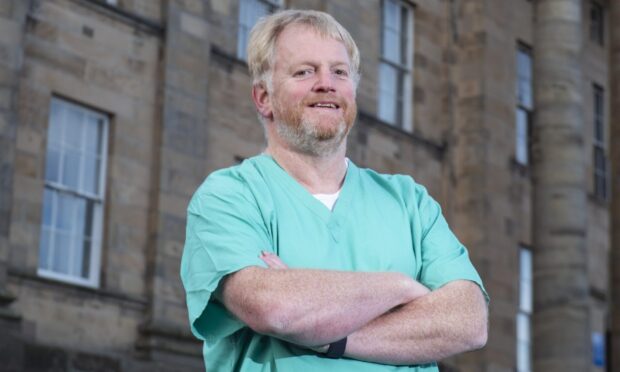
Dr. Struan Wilkie, a consultant radiologist at Dr Gray’s Hospital in Elgin, is at the forefront of a transformative approach to detecting lung cancer. By leveraging artificial intelligence (AI), Wilkie and his team at NHS Grampian aim to identify lung cancer earlier, significantly improving patient outcomes amid the disease’s persistent challenges. This initiative is particularly crucial as lung cancer remains the leading cause of cancer-related deaths in Scotland.
AI Revolutionizing Lung Cancer Detection
Every year, NHS Grampian’s radiology teams review approximately 70,000 chest X-rays, equating to about 300 images daily. Their mission is to identify early signs of lung cancer, which is often diagnosed at later stages due to vague symptoms. “It’s often a hidden killer,” Wilkie explains. Many patients undergo chest X-rays for unrelated health issues, making early detection even more challenging.
To combat this, the AI system developed under Wilkie’s guidance prioritizes chest X-rays that display concerning signs, allowing for more efficient management of patient care. By flagging urgent cases, the system ensures that reports can be delivered within 24 hours, significantly reducing initial diagnostic delays. “The earlier you find it, the more options there are for treatment,” Wilkie states, underscoring the importance of prompt detection.
Navigating Challenges and Fears Surrounding AI
Implementing AI within NHS Grampian was not without its hurdles. Transitioning from research trials to practical application took over a year, involving extensive governance checks and alignment of IT systems. Additionally, Wilkie faced concerns from staff regarding the potential impact of AI on their roles. “I think we have moved away from the ‘Oh, you’re replacing us all’ mentality,” he notes. Instead, the focus has shifted to viewing AI as a supportive tool rather than a replacement.
Wilkie emphasizes that AI acts as a prioritization tool, ensuring that patients requiring immediate attention are seen first. “At no point is the AI running autonomously,” he clarifies. This collaborative approach aims to alleviate pressures on medical personnel while enhancing the quality of care.
Reflecting on the evolution of medical imaging, Wilkie likens the emergence of AI to the shift from X-ray to computed tomography (CT), which revolutionized imaging techniques. “It’s probably analogous to when we went from X-ray to CT,” he explains, highlighting the potential of AI to address future NHS challenges and improve healthcare delivery.
As a pioneer in this field, Dr. Struan Wilkie’s work exemplifies the intersection of technology and medicine, showcasing how innovations can lead to better health outcomes. His journey began with a simple BBC Micro computer in the 1980s, igniting a lifelong passion for computing that now plays a crucial role in transforming lung cancer detection in Scotland.
Wilkie’s commitment to advancing healthcare through technology not only reflects his professional dedication but also symbolizes a broader movement within the NHS as it adapts to new technological landscapes. As he continues to explore the capabilities of AI, the future of early cancer detection looks promising, with the potential to save countless lives.


