British scientists have announced a significant advancement in cancer prevention, with a groundbreaking vaccine for lung cancer expected to enter human trials in summer 2026. This initiative is part of a broader effort to develop vaccines aimed at preventing several types of cancer, including breast, ovarian, and bowel cancers.
The aim is to create a comprehensive vaccination program that could potentially be administered free of charge through the National Health Service (NHS) during routine visits to general practitioners. Researchers believe that this vaccine could save up to 3.6 million lives annually worldwide, addressing the most severe forms of cancer and possibly extending the average human lifespan.
Innovative Research at the University of Oxford
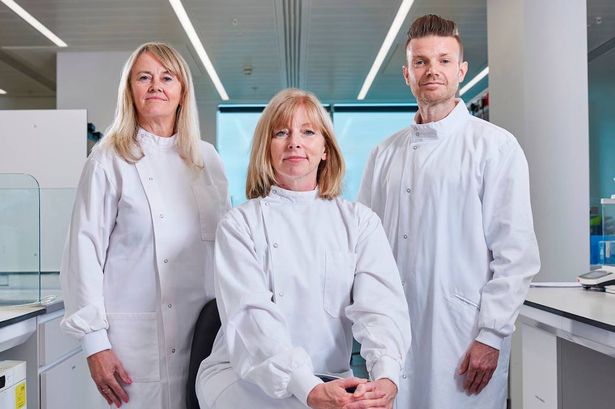
The project is being led by a team at the University of Oxford, with considerable support from esteemed organizations, including Cancer Research UK, the CRIS Cancer Foundation, and various pharmaceutical companies. Sarah Blagden, a clinician-scientist and professor of experimental oncology at Oxford, shared insights into the vaccine’s development during a recent episode of Channel 4’s documentary series, ‘Cancer Detectives: Finding the Cures.’
Blagden envisions a future where a single vaccine could prevent most major cancers, similar to existing vaccines for diseases like measles and rubella. This idea took form while listening to a podcast featuring Charles Swanton, deputy clinical director at the Francis Crick Institute in London. His discussion on cancer evolution inspired Blagden to redirect focus towards prevention rather than treatment.
Utilizing rapid vaccine development techniques honed during the COVID-19 pandemic, Blagden’s team is poised to introduce the anti-lung cancer vaccine. “What we think we have is the first vaccine that could actually prevent cancer from starting in the first place,” she explained. The vaccine targets pre-cancerous cells, designed to prompt the immune system to eliminate them before they progress to full-blown cancer.
A Vision for Comprehensive Cancer Prevention
Blagden emphasized that this innovative approach represents a paradigm shift in cancer research. Traditional oncology has focused primarily on treating established cancers, but her team is pioneering efforts to prevent the disease from developing in the first place. “Oncologists like myself are very fixed on treating established cancer,” she noted. “But this is an opportunity to actually go in with something to prevent it.”
The research team is not only developing the lung cancer vaccine but is also working to combine multiple cancer vaccines into one comprehensive solution. “If we have five or six different vaccines, we would then want to try and make one out of the best parts of those,” Blagden said. This strategy aims to provide effective cancer prevention for the younger population, significantly reducing their cancer risk.
Blagden remains optimistic, stating, “We’re very lucky at the moment. We’ve got really amazing scientists, we’ve got really cool technologies, and we’ve got patients supporting us.” She believes that this initiative represents a once-in-a-generation opportunity to change the landscape of cancer treatment and prevention.
As the clinical trials approach, the focus will be on demonstrating the vaccine’s safety and efficacy. Lessons learned from the pandemic have accelerated this process, providing a framework for rapid advancement. “We’ve seen already from the experiments that we’ve done—let’s just say that they look really, really promising,” Blagden remarked. “My message to cancer is, ‘we’re coming for you.’”
This ambitious project not only highlights the potential of vaccine research in combating cancer but also showcases the dedication of scientists like Blagden and her team, who are driven by personal experiences and a genuine desire to alleviate the suffering caused by cancer.