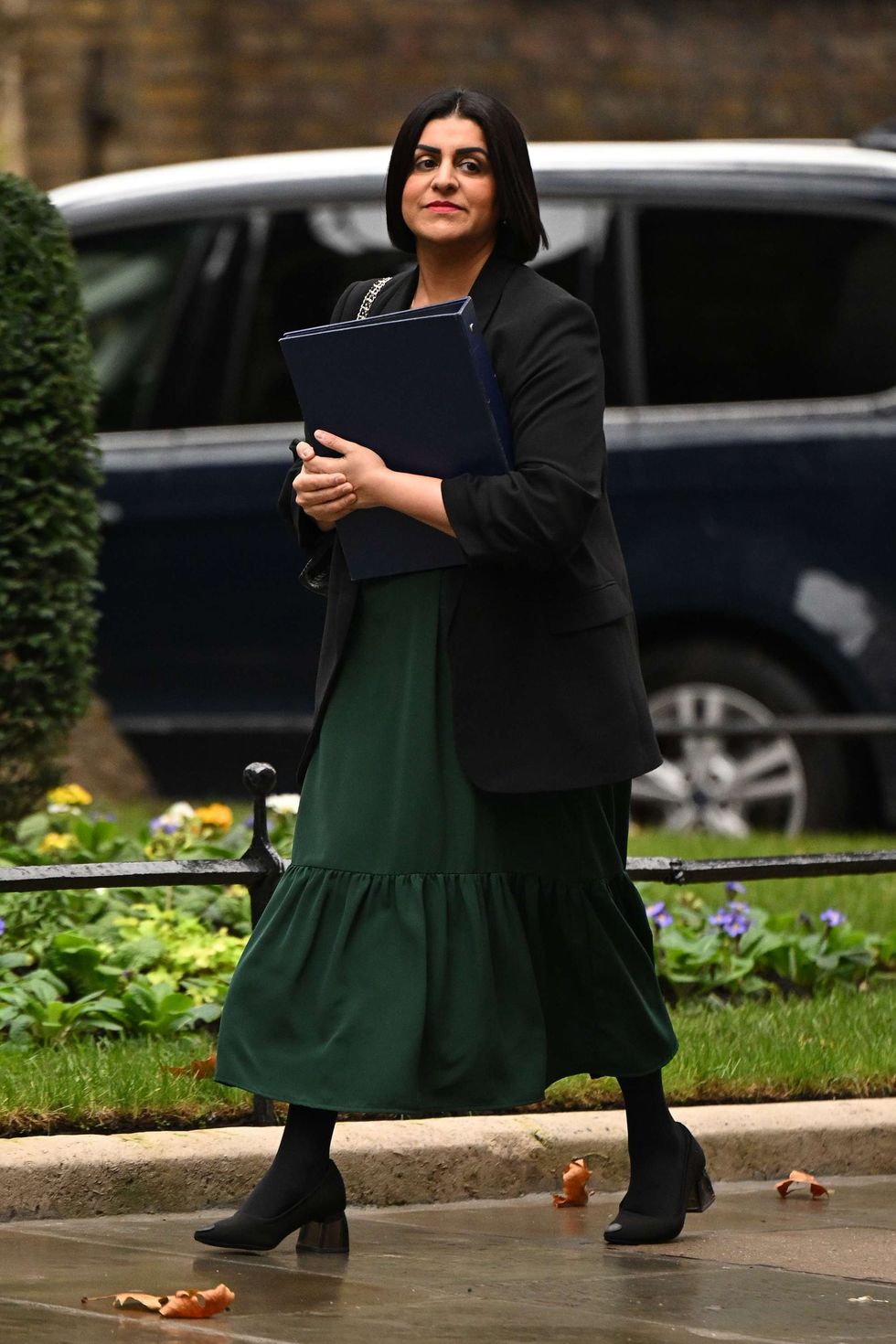
UPDATE: Shabana Mahmood is confronting significant challenges as the new Home Secretary, particularly regarding prejudice in the UK. In a candid discussion with former Prime Minister Tony Blair, she highlighted the urgency of her role amidst growing political tensions.
During their conversation, Mahmood stated, “There are a hundred landmines every day,” reflecting on her first hundred days in office. The dialogue, which stirred interest in Westminster, came amid concerns regarding Labour Party leadership as speculation mounts about Sir Keir Starmer’s future in Downing Street.
Mahmood emphasized the need for decisive action on policies ranging from asylum reform to police improvements. “There is something very clarifying about a crisis,” she asserted, underscoring her “go big or go home” philosophy. Her confidence was palpable as she addressed the audience, receiving applause for her strong stance against social media abuse, declaring, “No racist in this land is going to tell me I don’t belong in this country.”
The Home Secretary’s approach to asylum reform is deeply informed by her experiences with race relations in the UK. She acknowledged that without clear rules, prejudice flourishes, a sentiment echoed by Blair. However, both leaders must tread carefully; conflating legitimate concerns about immigration control with illegitimate racial prejudices risks alienating essential voter demographics.
As Labour seeks to consolidate support ahead of the 2024 elections, Mahmood’s challenge lies in retaining Labour voters while appealing to those tempted by right-wing parties like Reform and left alternatives such as the Greens. Mahmood’s assertion that the government aims to “unlock fairness, tolerance, and generosity” signifies a commitment to fostering inclusivity.
An important aspect of Mahmood’s tenure will be the introduction of a community sponsorship program to create legal pathways for refugees. Despite being the highest-ranking British Asian minister in Labour’s history, she faces the daunting task of addressing systemic issues, notably anti-Muslim hostility, which recent data suggests is a significant concern.
The government has initiated a working group, led by former Conservative minister Dominic Grieve, to finalize a definition of anti-Muslim hatred. This initiative comes as public awareness grows around the need for legal protections against discrimination. While a non-statutory definition may not alter legal frameworks, it is crucial for fostering public understanding and delineating acceptable discourse from harmful prejudice.
As Mahmood navigates the complexities of her role, the forthcoming definition of anti-Muslim hostility could play a vital role in shaping future policies. The government has not yet commented on a leaked draft definition, leaving many anticipating its official release early next year.
With the political landscape in flux, Shabana Mahmood’s leadership presents a pivotal moment for the Labour Party and the broader UK society. Her success will ultimately depend on her ability to balance policy reform with the pressing need to combat prejudice and foster community cohesion. The implications of her tenure will be felt across the nation, making it essential for observers to stay tuned for the latest developments.