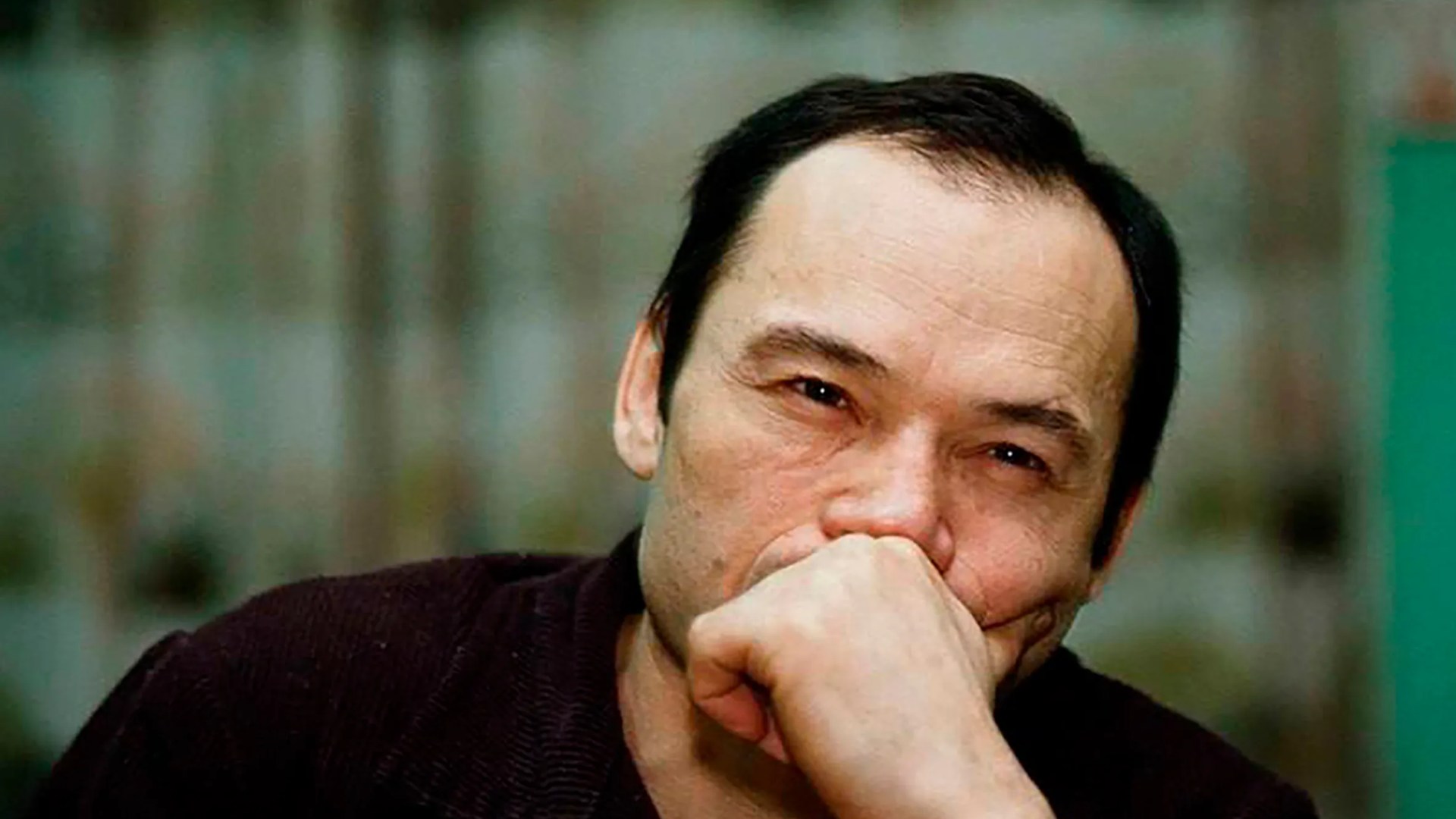
A notorious cannibal killer known as Nikolai Dzhumagaliev, or “Iron Fang,” has broken his silence for the first time in 35 years. The 73-year-old, who has been confined to a high-security psychiatric hospital in Kazakhstan since his recapture in 1991, was responsible for the murders of at least ten women and girls, beginning in 1979. Recently, doctors reported that Dzhumagaliev’s health had improved significantly, allowing him to communicate normally and even speak with family members.
For nearly four decades, Dzhumagaliev had been mute, a condition attributed to his schizophrenia. His recent stabilization followed a new treatment regimen that has reportedly helped him regain consciousness. According to the Russian media outlet SHOT, he will now be permitted to converse with his niece twice a month, marking a significant shift in his long isolation.
Dzhumagaliev earned his chilling nickname due to the metal crowns on his teeth, but his legacy is defined by his gruesome acts. Described as a targeted, misogynistic serial killer, investigators have characterized him as a calculated predator rather than an indiscriminate attacker. His known victims were exclusively women and girls, whom he brutally murdered and then consumed. Reports indicate that after killing his first victim, he survived for a month by preparing the flesh in various ways, from boiling to frying, and even made dumplings from human remains.
Psychiatrists and investigators have long speculated that Dzhumagaliev developed a deep-seated animosity towards women after being diagnosed with a sexually transmitted infection. He believed this made them “impure” and corrupt, leading him to seek revenge through extreme violence. He reportedly expressed a desire to “understand” women’s bodies through his horrific actions, which he later merged with occult beliefs, viewing murder as a form of ritual sacrifice.
Dzhumagaliev’s infamy grew during his 18-month escape from police custody starting in 1989, which instilled fear across the former Soviet Union. He was finally recaptured in 1991 in Uzbekistan, where footage revealed him speaking to police, casually mentioning his confinement in a hospital. He claimed, “I’ve fully come to terms with my past,” a statement that raises questions about his psychological state.
Over the years, Dzhumagaliev has been dubbed the “Soviet Hannibal Lecter,” a label that reflects both his gruesome actions and his perceived intelligence. Found not criminally responsible due to his mental illness, he was placed in psychiatric confinement instead of a traditional prison. Profilers have suggested that his violent acts stemmed from a mixture of male dominance fantasies, ritualistic behaviors, and deep-seated sexual resentment.
In 2016, reports of a possible escape from the hospital caused a brief panic, but it was later confirmed to be a false alarm. As Dzhumagaliev begins to communicate after decades of silence, the ramifications of his past crimes continue to resonate deeply within Russian society, serving as a grim reminder of the horrors he inflicted.