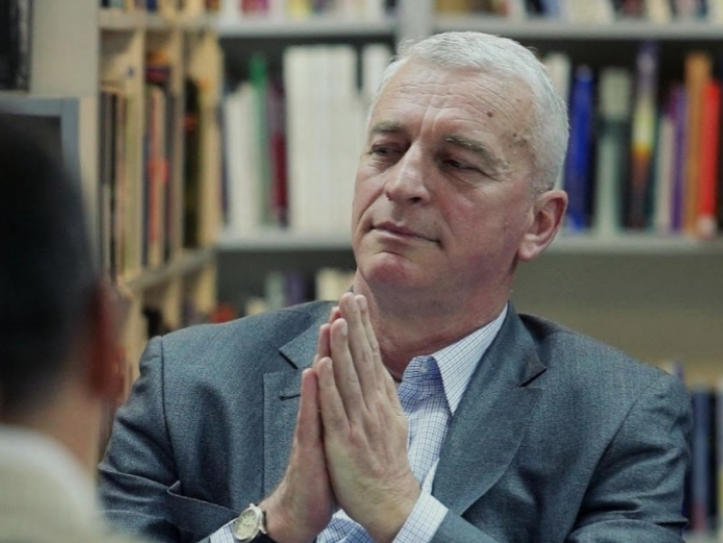
UPDATE: Renowned Montenegrin writer Milorad Popović has issued a stark warning about the resurgence of nationalism in Montenegro, stating that the region is dangerously close to repeating the violent conflicts of the 1990s. His alarming comments come in light of a recent video where the mayor of Pljevlja was seen making derogatory remarks against Bosniak citizens.
In an interview with “Slobodna Bosna,” Popović expressed deep shame over the current political leadership in Montenegro, describing them as “chauvinists and nobodies.” He drew parallels to the ethnic persecution of the 1990s, pointing out the ongoing struggles faced by Bosniaks, Albanians, and Montenegrins under the shadow of Serbian nationalism.
“Political circumstances in Montenegro surprise only those who are unaware of the nature of Montenegrin-Serbian relations,” Popović stated, highlighting a long history of conflict dating back to the attempted assassination of King Nikola in 1907. He emphasized that the fight against the ideology of ‘Greater Serbia’ remains a pressing issue, as it has historically resulted in devastating consequences including genocide and ethnic cleansing.
Popović’s comments resonate with a growing concern among citizens about the implications of rising nationalism. He argues that the current regime, led by figures like Andrija Mandić of the ruling New Serbian Democracy, uses the presence of Albanians and Bosniaks to project a false image of democracy while simultaneously enacting policies that discriminate against Montenegrins.
As tensions rise, Popović warns that the very foundations of the Montenegrin state are at risk. “Any antagonization of minority communities and Montenegrins is the most dangerous part of the Greater Serbian plan to dismantle Montenegro,” he cautioned.
Looking ahead, he stressed the need for unity among Montenegrins and their allies to resist aggression. “Montenegro and Bosnia must focus on protecting their interests and fighting for survival,” he stated emphatically.
This urgent intervention from Popović comes at a critical time when the political landscape in Montenegro is fraught with tension. The potential for civil unrest mirrors the volatile atmosphere of the 1990s, underscoring the necessity for immediate action and solidarity among the diverse communities within the region.
The situation remains fluid, and observers are urged to monitor developments closely as Popović’s stark warnings echo throughout Montenegrin society. With growing unrest in the Balkans, the need for a unified response against rising nationalism is more crucial than ever.
As the international community watches, Montenegro stands at a crossroads. Will it resist the pull of historical conflicts, or will it succumb to the destructive forces of nationalism once more? The stakes have never been higher, and the implications extend beyond national borders.